
SS304 vs SS316 Instrumentation Fittings: Complete Comparison Guide for Industrial Applications
The SS304 vs SS316 Instrumentation Fittings comparison is one of the most important considerations when selecting components for industrial instrumentation systems. Both stainless steel grades offer excellent durability and reliability. However, they differ in corrosion resistance, chemical composition, cost, and applications. Understanding the differences between SS304 and SS316 instrumentation fittings can help engineers, procurement teams, and plant operators choose the right material for long-term performance. In this guide, we will compare SS304 vs SS316 instrumentation fittings in terms of corrosion resistance, strength, durability, temperature performance, cost, and industrial applications. Moreover, we will explain when to choose SS304 and when SS316 becomes the better investment. By the end of this article, you will have a clear understanding of which material best suits your operational requirements. What Are Instrumentation Fittings? Instrumentation fittings are precision-engineered components used to connect, control, and direct the flow of liquids and gases within instrumentation systems. These fittings play a critical role in maintaining leak-free performance, ensuring system reliability, and supporting safe operations. Common types of instrumentation fittings include: Tube Fittings Double Ferrule Fittings Compression Fittings Elbows Tees Unions Reducers Adapters As a result, these fittings are widely used in oil and gas, petrochemical, chemical processing, pharmaceutical, and power generation industries. Understanding Stainless Steel Grades Before comparing SS304 and SS316 instrumentation fittings, it is important to understand the role of stainless steel in industrial systems. Stainless steel contains chromium, which forms a protective oxide layer on the surface. Consequently, this layer helps prevent rust and corrosion. Furthermore, additional alloying elements can improve performance in challenging environments. The two most popular grades for instrumentation fittings are SS304 and SS316. Although they appear similar, their performance differs significantly under certain operating conditions. What Is SS304 Stainless Steel? SS304 is an austenitic stainless steel that contains approximately 18–20% chromium and 8–10.5% nickel. Because of its balanced properties and cost-effectiveness, it has become one of the most widely used stainless steel grades worldwide. Benefits of SS304 Instrumentation Fittings Excellent corrosion resistance in normal environments Good mechanical strength Easy fabrication and welding Cost-effective solution Widely available in global markets Therefore, SS304 instrumentation fittings are suitable for many general industrial applications. What Is SS316 Stainless Steel? SS316 is an upgraded stainless steel grade that contains molybdenum in addition to chromium and nickel. The presence of molybdenum significantly improves corrosion resistance, especially in chloride-rich and chemically aggressive environments. Benefits of SS316 Instrumentation Fittings Superior resistance to corrosion Better protection against chlorides Longer service life Excellent performance in marine applications Enhanced resistance to chemicals and acids Consequently, SS316 instrumentation fittings are often selected for demanding industrial environments. SS304 vs SS316 Instrumentation Fittings: Key Differences 1. Chemical Composition The primary difference between SS304 and SS316 instrumentation fittings is the addition of molybdenum in SS316. Property SS304 SS316 Chromium 18–20% 16–18% Nickel 8–10.5% 10–14% Molybdenum No 2–3% As a result, SS316 offers better protection against corrosion and pitting. 2. Corrosion Resistance Corrosion resistance is often the deciding factor when selecting instrumentation fittings. SS304 performs well in freshwater and general industrial environments. However, it may experience pitting corrosion when exposed to chlorides or saltwater. On the other hand, SS316 performs exceptionally well in coastal, marine, and chemical processing environments. Therefore, industries that face harsh conditions often prefer SS316. 3. Mechanical Strength Both materials provide excellent strength and durability. In most industrial applications, the difference in mechanical performance is minimal. Nevertheless, SS316 generally offers slightly better performance under aggressive operating conditions. 4. Temperature Performance Instrumentation systems frequently operate at elevated temperatures. While both grades perform well, SS316 offers improved resistance in high-temperature environments. Therefore, SS316 is often selected for applications involving extreme process conditions. 5. Cost Comparison Cost is another important factor when comparing SS304 vs SS316 instrumentation fittings. SS304 is more affordable because it contains lower levels of alloying elements. Consequently, it is commonly used in projects where budget is a major consideration. However, SS316 often delivers greater long-term value due to reduced maintenance costs and longer service life. Applications of SS304 Instrumentation Fittings SS304 instrumentation fittings are commonly used in: Food processing plants Water treatment facilities HVAC systems Pharmaceutical equipment General manufacturing industries Because these environments are relatively less corrosive, SS304 often provides sufficient performance. Applications of SS316 Instrumentation Fittings SS316 instrumentation fittings are commonly used in: Offshore oil and gas platforms Marine industries Petrochemical plants Chemical processing facilities Desalination plants Fertilizer industries Since these environments are highly corrosive, SS316 provides superior reliability and durability. How to Choose Between SS304 and SS316 Instrumentation Fittings Choose SS304 if: Your environment has low corrosion risk. Budget optimization is important. Freshwater applications are involved. General industrial performance is sufficient. Choose SS316 if: Chlorides are present. The installation is near coastal areas. Chemical exposure is significant. Maximum service life is required. Downtime must be minimized. Therefore, the final decision should be based on operating conditions rather than initial cost alone. Frequently Asked Questions Is SS316 better than SS304? SS316 offers better corrosion resistance. However, SS304 may be the better choice for standard industrial applications due to its lower cost. Why is SS316 more expensive? SS316 contains molybdenum and higher nickel content. Consequently, its production cost is higher than SS304. Can SS304 be used in marine environments? While SS304 can be used in some marine applications, SS316 is generally recommended because of its superior resistance to saltwater corrosion. Which stainless steel grade lasts longer? In corrosive environments, SS316 typically lasts longer and requires less maintenance. Conclusion When comparing SS304 vs SS316 instrumentation fittings, there is no universal winner. Instead, the best choice depends on your operating environment, process requirements, and budget. If you need a cost-effective solution for general industrial applications, SS304 instrumentation fittings are an excellent option. However, if your system operates in marine, chemical, offshore, or highly corrosive environments, SS316 instrumentation fittings provide greater protection, longer service life, and improved reliability. Ultimately, selecting the right material helps ensure leak-free performance, enhanced safety, and lower maintenance costs throughout the life of the instrumentation system.
Leak-Proof Instrumentation Fittings: How to Prevent Industrial Leakage
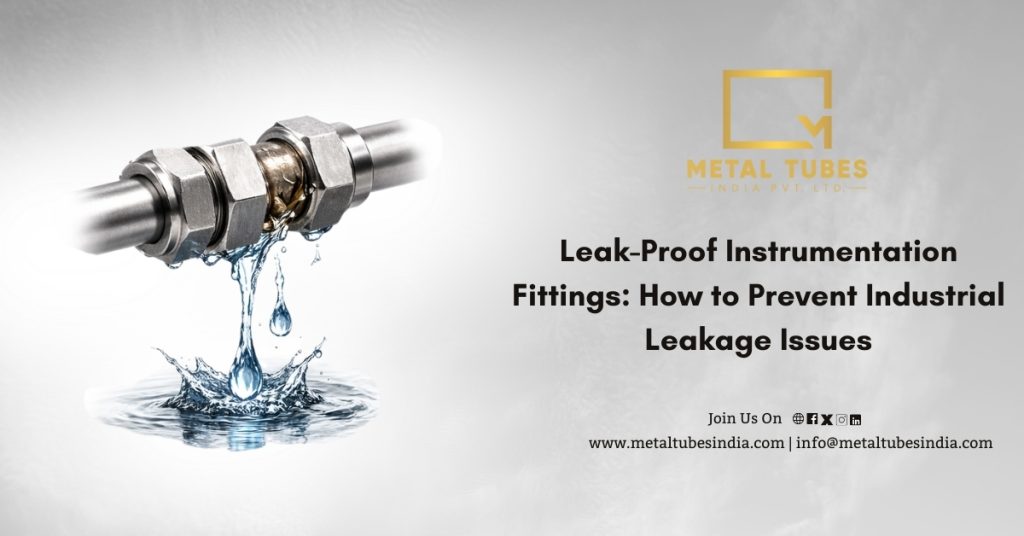
Leak-Proof Instrumentation Fittings: A Complete Guide by M Metal Tubes India Pvt Ltd Introduction Leak-Proof Instrumentation Fittings play a crucial role in preventing industrial leakage in manufacturing plants, oil & gas systems, chemical industries, and hydraulic applications. Even a small leak in fittings or valves can cause safety hazards, production downtime, and costly maintenance. At M Metal Tubes India Pvt Ltd, we understand that leak-proof performance is not just about components it is about reliability, safety, and long-term industrial efficiency. This guide explains the major causes of industrial leakage and how high-quality Leak-Proof Instrumentation Fittings help prevent leakage issues effectively. What Are Leak-Proof Instrumentation Fittings in Industrial Applications? Leak-Proof Instrumentation Fittings are precision-engineered components designed to ensure zero leakage under high pressure, temperature, and vibration conditions. These fittings create a strong and secure seal between tubes, pipes, and industrial equipment. They are widely used in: Oil & Gas Industries Chemical Plants Power Plants Marine Applications Pharmaceutical Industries Hydraulic & Pneumatic Systems Using premium Leak-Proof Instrumentation Fittings from trusted manufacturers like M Metal Tubes India Pvt Ltd improves operational safety and system performance. Major Causes of Industrial Leakage Issues in Fittings and Valves 1. Poor Quality Instrumentation Fittings Low-grade fittings often fail under pressure, leading to leakage and system damage. High-quality Leak-Proof Instrumentation Fittings are essential for long-term reliability. 2. Improper Installation of Fittings Incorrect tightening, misalignment, or wrong fitting selection can cause micro-leakage over time in industrial systems. 3. High Pressure and Temperature Conditions Industrial environments operate under extreme pressure and temperature. Without Leak-Proof Instrumentation Fittings, leakage risks increase significantly. 4. Corrosion and Material Failure Using low-quality materials in corrosive environments leads to cracks, seal damage, and fluid leakage. 5. Vibration in Industrial Machinery Continuous vibration can loosen joints and fittings, making leak-proof sealing difficult without precision-engineered instrumentation fittings. How Leak-Proof Instrumentation Fittings Prevent Industrial Leakage ✔️ Choose High-Quality Leak-Proof Instrumentation Fittings Selecting precision-engineered Leak-Proof Instrumentation Fittings is the most effective way to prevent industrial leakage. At M Metal Tubes India Pvt Ltd, our fittings are designed for: High pressure resistance Corrosion resistance Long durability Superior leak-proof sealing ✔️ Use the Right Material for Leak-Proof Performance Material selection directly impacts leakage prevention. Best materials used in Leak-Proof Instrumentation Fittings: Stainless Steel (SS 304 / SS 316) – High corrosion resistance Brass – Durable and cost-effective Alloy Steel – Suitable for high-pressure applications Proper material ensures leak-free performance in harsh industrial environments. ✔️ Proper Installation of Instrumentation Fittings Even the best Leak-Proof Instrumentation Fittings can leak if installed incorrectly. Installation tips: Use correct torque tightening Avoid over-tightening Ensure proper tube alignment Use skilled technicians This significantly reduces leakage risks in industrial pipelines and systems. ✔️ Regular Inspection and Maintenance of Industrial Fittings Preventive maintenance is essential to maintain leak-proof systems. Recommended practices: Regular inspection of fittings and valves Replacement of worn components Corrosion and crack inspection Periodic pressure testing Routine monitoring helps detect minor leakage before major industrial failure. Role of Precision Manufacturing in Leak-Proof Instrumentation Fittings Precision engineering is the foundation of Leak-Proof Instrumentation Fittings.As a leading manufacturer based in Mumbai, M Metal Tubes India Pvt Ltd uses advanced manufacturing processes, tight tolerances, and strict quality testing to ensure zero-leak performance, Precision manufacturing follows ASME industrial engineering standards to ensure leak-proof sealing and durability. Our manufacturing strengths include: High-precision machining Strict quality control Premium raw materials Industry-standard production Benefits of Using Leak-Proof Instrumentation Fittings in Industries 🔒 Enhanced Industrial Safety Prevents hazardous gas, oil, and chemical leakage. 💰 Reduced Maintenance Costs Leak-proof systems reduce downtime and repair expenses. ⚙️ Improved System Efficiency Leak-free fittings improve flow efficiency and operational stability. 📈 Extended Equipment Life Prevents corrosion damage and increases equipment lifespan. 🏭 Reliable Industrial Operations Ensures uninterrupted industrial production and performance. Why Choose M Metal Tubes India Pvt Ltd for Leak-Proof Instrumentation Fittings? M Metal Tubes India Pvt Ltd is a trusted manufacturer and supplier of high-quality Leak-Proof Instrumentation Fittings, valves, and industrial components designed for critical applications. Our product range includes: Instrumentation Fittings Needle Valves Manifold Valves Tube Fittings Air Headers Condensate Pots Industrial Valves & Components All products are manufactured as per international quality standards to deliver reliable and leak-proof industrial performance. Conclusion Industrial leakage can cause serious safety, financial, and operational risks. Using high-quality Leak-Proof Instrumentation Fittings, proper installation methods, and regular maintenance can effectively eliminate leakage issues. M Metal Tubes India Pvt Ltd provides precision-engineered Leak-Proof Instrumentation Fittings that ensure safety, durability, and long-term industrial efficiency. Investing in premium leak-proof fittings is the key to achieving zero leakage and reliable industrial systems.