
Export-Quality M Metal Tubes India Pvt Ltd: What Global Buyers Look For
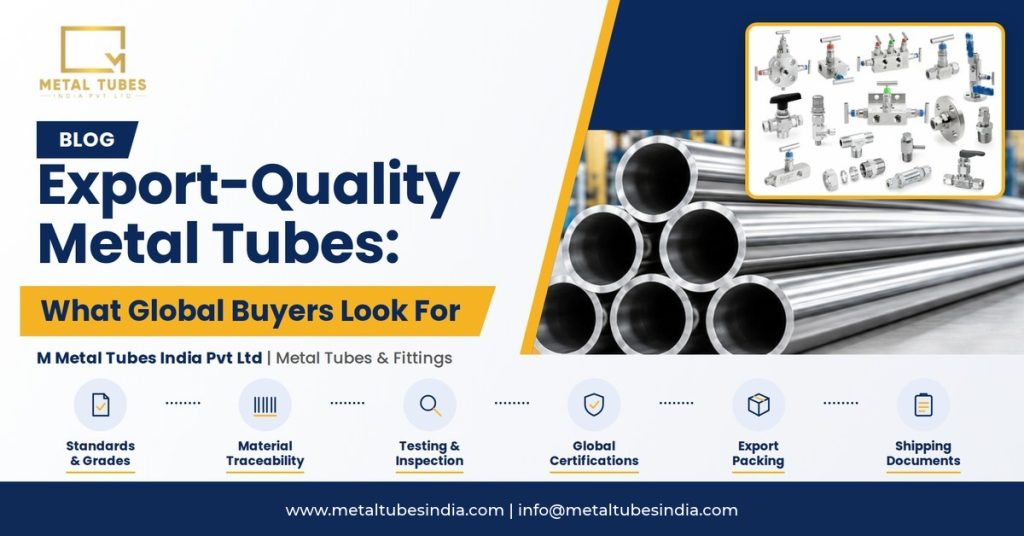
Export-quality metal tubes are tubes that meet international standards for chemistry, dimensions, strength and finish. They also come with test certificates, traceable batches and export-grade packing. Global buyers check all of these before they place an order. In this guide, M Metal Tubes India Pvt Ltd explains what overseas buyers look for and how we meet each requirement. What Makes Metal Tubes Export-Quality? A tube is not export-quality just because it looks good. It must pass checks that a buyer in Europe, the Middle East or North America can verify on paper. In short, export-quality metal tubes share five traits: They follow a recognised standard such as ASTM, ASME, EN or DIN. Their chemical and mechanical properties are tested and documented. Their dimensions stay within tight tolerances. Their surface finish is clean and consistent. They are packed to survive long sea or air freight. Miss any one of these, and a shipment can be rejected at the port. That costs time and money. 1. Compliance With International Standards Global buyers start with the standard. It tells them the tube will behave as expected in their application. Common standards for stainless steel tubes include: ASTM A269: seamless and welded austenitic tubing for general service. ASTM A213: seamless tubes for boilers, superheaters and heat exchangers. ASTM A249: welded tubes for boilers and heat exchangers. ASTM A312: pipes for high-temperature and corrosive service. EN 10216-5: seamless stainless steel tubes for pressure purposes. Check that the standard on the quote matches the standard in your purchase order. Also confirm the grade, for example SS 304, 304L, 316 or 316L. A small mismatch can change corrosion resistance and weld quality. At M Metal Tubes India Pvt Ltd, we supply tubes to all the major international standards and grades. 2. Material Quality and Traceability Buyers want to know exactly what their tubes are made of. For that reason, good suppliers offer full traceability from raw material to finished tube. Look for these documents: Mill Test Certificate (MTC): most orders ask for EN 10204 Type 3.1. Heat number tracking: each tube links back to its melt batch. Chemical analysis: it confirms nickel, chromium and molybdenum levels. Mechanical test results: these cover tensile strength, yield strength and elongation. Many buyers also request Positive Material Identification (PMI). This test uses a handheld analyser to check the alloy on the finished tube. As a result, it catches grade mix-ups before shipping. At M Metal Tubes India Pvt Ltd, every tube comes with full material traceability and test certificates. 3. Dimensional Accuracy and Tolerances Tubes must fit the equipment they go into. Therefore, buyers check outer diameter, wall thickness, length and straightness against the standard. Here is what to confirm: Outer diameter and wall thickness tolerance. Length tolerance, whether fixed or random. Ovality and straightness. Ends cut square and free of burrs. Tight tolerances matter most for heat exchangers, instrumentation lines and hydraulic systems. In these uses, a small error can cause leaks or poor heat transfer. At M Metal Tubes India Pvt Ltd, we hold tight tolerances and check dimensions on every lot. 4. Testing and Quality Control A certificate means little without real testing behind it. Reliable manufacturers test tubes during production and again before dispatch. Common tests for export-quality metal tubes include: Hydrostatic test: checks the tube holds pressure without leaking. Eddy current test: finds small surface and sub-surface flaws. Flaring and flattening tests: show how the tube behaves under deformation. Intergranular corrosion test: confirms resistance in harsh environments. Hardness test: verifies the tube meets the specified range. Visual and dimensional inspection: checks finish and size on every lot. Buyers often hire a third-party inspector. Good suppliers welcome this, because it builds trust on both sides. At M Metal Tubes India Pvt Ltd, we test tubes during production and again before dispatch. We also welcome third-party inspection. 5. Surface Finish and Cleanliness Surface finish affects both looks and performance. For example, food, dairy and pharma buyers need smooth, clean tube surfaces that resist bacteria buildup. Common finishes include: Annealed and pickled (AP): a clean matte finish for industrial use. Bright annealed (BA): a shiny, smooth finish for sanitary and instrument use. Polished: a high-grade finish for hygienic and decorative applications. Ask for the finish level in writing. Also ask how the supplier cleans and caps the tubes after production. At M Metal Tubes India Pvt Ltd, we offer all the common finishes to match your application. 6. Certifications That Build Buyer Confidence Certifications show that a manufacturer follows a controlled process. They do not replace product testing. However, they signal discipline. Global buyers often look for: ISO 9001: a quality management system. PED 2014/68/EU: needed for pressure equipment sold in the European Union. Third-party inspection approvals: for example from TUV, SGS or Bureau Veritas. Always ask to see the certificate itself. Check the issue date, scope and validity. At M Metal Tubes India Pvt Ltd, we offer all the certifications that global buyers ask for. 7. Export-Grade Packing and Marking Tubes travel thousands of kilometres before they reach the buyer. Poor packing causes dents, scratches and rust. Strong export packing usually includes: Plastic end caps on every tube. Bundles wrapped in protective film or paper. Wooden cases or steel-strapped bundles. Moisture protection for sea freight. Clear marking of grade, size, heat number, standard and batch. In addition, correct markings help customs clearance and make warehouse handling easier. At M Metal Tubes India Pvt Ltd, we pack every export order so it arrives safe and clearly marked. 8. Documentation and Shipping Support Paperwork can delay a shipment as easily as a quality problem can. Because of this, experienced exporters prepare documents carefully. Typical export documents include: Commercial invoice and packing list. Certificate of origin. Mill test certificates. Bill of lading or airway bill. Inspection reports, where required. Global buyers also value clear delivery timelines and quick replies. A supplier who answers technical questions fast is usually well organised behind the scenes. At M Metal Tubes India Pvt Ltd,
SS304 vs SS316 Instrumentation Fittings: Complete Comparison Guide for Industrial Applications
The SS304 vs SS316 Instrumentation Fittings comparison is one of the most important considerations when selecting components for industrial instrumentation systems. Both stainless steel grades offer excellent durability and reliability. However, they differ in corrosion resistance, chemical composition, cost, and applications. Understanding the differences between SS304 and SS316 instrumentation fittings can help engineers, procurement teams, and plant operators choose the right material for long-term performance. In this guide, we will compare SS304 vs SS316 instrumentation fittings in terms of corrosion resistance, strength, durability, temperature performance, cost, and industrial applications. Moreover, we will explain when to choose SS304 and when SS316 becomes the better investment. By the end of this article, you will have a clear understanding of which material best suits your operational requirements. What Are Instrumentation Fittings? Instrumentation fittings are precision-engineered components used to connect, control, and direct the flow of liquids and gases within instrumentation systems. These fittings play a critical role in maintaining leak-free performance, ensuring system reliability, and supporting safe operations. Common types of instrumentation fittings include: Tube Fittings Double Ferrule Fittings Compression Fittings Elbows Tees Unions Reducers Adapters As a result, these fittings are widely used in oil and gas, petrochemical, chemical processing, pharmaceutical, and power generation industries. Understanding Stainless Steel Grades Before comparing SS304 and SS316 instrumentation fittings, it is important to understand the role of stainless steel in industrial systems. Stainless steel contains chromium, which forms a protective oxide layer on the surface. Consequently, this layer helps prevent rust and corrosion. Furthermore, additional alloying elements can improve performance in challenging environments. The two most popular grades for instrumentation fittings are SS304 and SS316. Although they appear similar, their performance differs significantly under certain operating conditions. What Is SS304 Stainless Steel? SS304 is an austenitic stainless steel that contains approximately 18–20% chromium and 8–10.5% nickel. Because of its balanced properties and cost-effectiveness, it has become one of the most widely used stainless steel grades worldwide. Benefits of SS304 Instrumentation Fittings Excellent corrosion resistance in normal environments Good mechanical strength Easy fabrication and welding Cost-effective solution Widely available in global markets Therefore, SS304 instrumentation fittings are suitable for many general industrial applications. What Is SS316 Stainless Steel? SS316 is an upgraded stainless steel grade that contains molybdenum in addition to chromium and nickel. The presence of molybdenum significantly improves corrosion resistance, especially in chloride-rich and chemically aggressive environments. Benefits of SS316 Instrumentation Fittings Superior resistance to corrosion Better protection against chlorides Longer service life Excellent performance in marine applications Enhanced resistance to chemicals and acids Consequently, SS316 instrumentation fittings are often selected for demanding industrial environments. SS304 vs SS316 Instrumentation Fittings: Key Differences 1. Chemical Composition The primary difference between SS304 and SS316 instrumentation fittings is the addition of molybdenum in SS316. Property SS304 SS316 Chromium 18–20% 16–18% Nickel 8–10.5% 10–14% Molybdenum No 2–3% As a result, SS316 offers better protection against corrosion and pitting. 2. Corrosion Resistance Corrosion resistance is often the deciding factor when selecting instrumentation fittings. SS304 performs well in freshwater and general industrial environments. However, it may experience pitting corrosion when exposed to chlorides or saltwater. On the other hand, SS316 performs exceptionally well in coastal, marine, and chemical processing environments. Therefore, industries that face harsh conditions often prefer SS316. 3. Mechanical Strength Both materials provide excellent strength and durability. In most industrial applications, the difference in mechanical performance is minimal. Nevertheless, SS316 generally offers slightly better performance under aggressive operating conditions. 4. Temperature Performance Instrumentation systems frequently operate at elevated temperatures. While both grades perform well, SS316 offers improved resistance in high-temperature environments. Therefore, SS316 is often selected for applications involving extreme process conditions. 5. Cost Comparison Cost is another important factor when comparing SS304 vs SS316 instrumentation fittings. SS304 is more affordable because it contains lower levels of alloying elements. Consequently, it is commonly used in projects where budget is a major consideration. However, SS316 often delivers greater long-term value due to reduced maintenance costs and longer service life. Applications of SS304 Instrumentation Fittings SS304 instrumentation fittings are commonly used in: Food processing plants Water treatment facilities HVAC systems Pharmaceutical equipment General manufacturing industries Because these environments are relatively less corrosive, SS304 often provides sufficient performance. Applications of SS316 Instrumentation Fittings SS316 instrumentation fittings are commonly used in: Offshore oil and gas platforms Marine industries Petrochemical plants Chemical processing facilities Desalination plants Fertilizer industries Since these environments are highly corrosive, SS316 provides superior reliability and durability. How to Choose Between SS304 and SS316 Instrumentation Fittings Choose SS304 if: Your environment has low corrosion risk. Budget optimization is important. Freshwater applications are involved. General industrial performance is sufficient. Choose SS316 if: Chlorides are present. The installation is near coastal areas. Chemical exposure is significant. Maximum service life is required. Downtime must be minimized. Therefore, the final decision should be based on operating conditions rather than initial cost alone. Frequently Asked Questions Is SS316 better than SS304? SS316 offers better corrosion resistance. However, SS304 may be the better choice for standard industrial applications due to its lower cost. Why is SS316 more expensive? SS316 contains molybdenum and higher nickel content. Consequently, its production cost is higher than SS304. Can SS304 be used in marine environments? While SS304 can be used in some marine applications, SS316 is generally recommended because of its superior resistance to saltwater corrosion. Which stainless steel grade lasts longer? In corrosive environments, SS316 typically lasts longer and requires less maintenance. Conclusion When comparing SS304 vs SS316 instrumentation fittings, there is no universal winner. Instead, the best choice depends on your operating environment, process requirements, and budget. If you need a cost-effective solution for general industrial applications, SS304 instrumentation fittings are an excellent option. However, if your system operates in marine, chemical, offshore, or highly corrosive environments, SS316 instrumentation fittings provide greater protection, longer service life, and improved reliability. Ultimately, selecting the right material helps ensure leak-free performance, enhanced safety, and lower maintenance costs throughout the life of the instrumentation system.
What is a 3 Way Ball Valve? Working, Types & Uses Explained
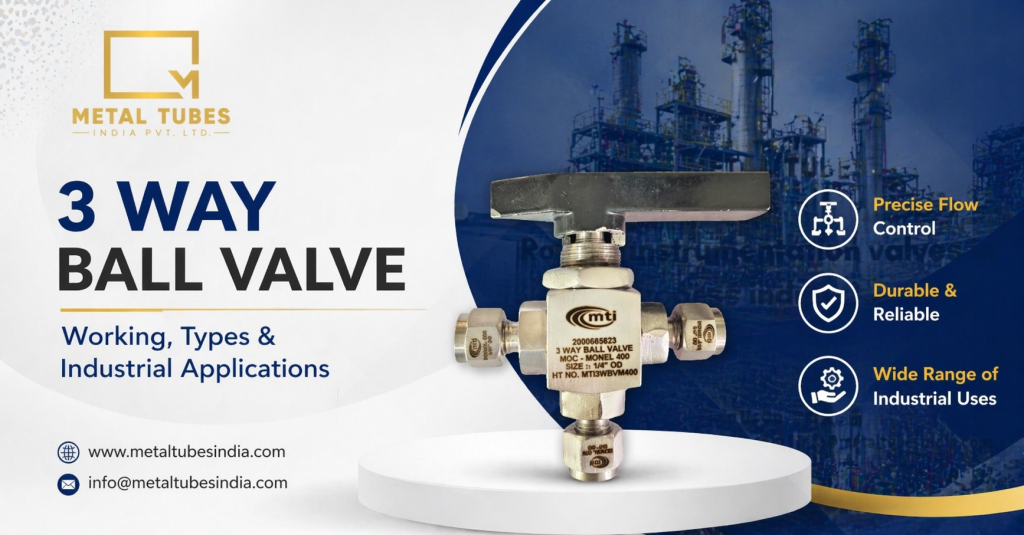
Introduction In industrial piping systems, controlling the direction and flow of fluids is essential for smooth and safe operations. While standard valves handle simple on/off control, many applications require more flexibility. This is where a 3 way ball valve becomes highly effective. Designed to manage multiple flow paths within a single unit, 3 way ball valves help reduce system complexity, improve efficiency, and minimize installation costs. They are widely used across industries such as oil & gas, chemical processing, power generation, and water treatment. In this guide, we explain what a 3 way ball valve is, how it works, its types, and its key industrial uses, so you can make an informed decision for your application. What is a 3 Way Ball Valve? A 3 way ball valve is a quarter-turn valve equipped with three ports, allowing fluid to flow in multiple directions. Unlike a standard 2-way valve, which only permits straight flow, this valve can divert, mix, or shut off flow depending on its design. The internal mechanism consists of a rotating ball with a specially designed bore. By turning the handle or actuator, the flow path changes, enabling different configurations within the same valve body. Working Principle of a 3 Way Ball Valve The working of a 3 way ball valve is based on a simple yet efficient mechanism. Inside the valve, a drilled ball rotates when the handle is turned 90 degrees. This rotation aligns the internal passage with different ports, controlling how the fluid flows. Depending on the valve design, it can: Redirect flow from one inlet to another outlet Combine flow from two sources into one line Stop flow completely when required Because of this functionality, a single 3 way ball valve can replace multiple conventional valves, making the system more compact and easier to maintain. Types of 3 Way Ball Valves 1. L-Port 3 Way Ball Valve The L-port valve has an “L”-shaped internal bore. It is mainly used for diverting flow between two outlets. Key Characteristics: Directs flow in one direction at a time Prevents mixing of fluids Suitable for switching applications 2. T-Port 3 Way Ball Valve The T-port valve features a “T”-shaped bore, allowing flow mixing or splitting. Key Characteristics: Can connect all three ports simultaneously Ideal for blending or distributing fluids Offers multiple flow configurations 3. Manual vs Actuated Valves 3 way ball valves are also classified based on operation: Manual Valves: Operated using a lever handle Actuated Valves: Controlled via pneumatic or electric actuators Actuated valves are preferred in automated systems where precision and remote control are required. Uses of 3 Way Ball Valves in Industry Oil & Gas Industry These valves are widely used for flow diversion, blending, and pipeline management in upstream and downstream operations. Chemical Processing 3 way ball valves are ideal for handling corrosive and hazardous fluids, ensuring safe and controlled mixing. Power Plants In power generation facilities, they are used in cooling systems, steam lines, and fluid distribution networks. Pharmaceutical Industry They support hygienic and precise fluid handling, which is essential for maintaining product quality. Water Treatment Plants Used for redirecting water flow and optimizing system efficiency, especially in filtration and distribution systems. Advantages of Using a 3 Way Ball Valve Combines multiple functions in one valve Reduces piping complexity and installation cost Compact and space-saving design Quick and easy operation High durability with minimal maintenance How to Choose the Right 3 Way Ball Valve Selecting the correct valve ensures long-term performance and safety. Key factors to consider include: Material: Stainless Steel (SS 304/316), Monel, Brass Pressure and Temperature Ratings Flow Requirement (L-Port or T-Port) End Connections: Threaded, flanged, or welded Automation Needs: Manual or actuated A proper selection not only improves efficiency but also reduces downtime and maintenance costs. Why Choose M Metal Tubes India Pvt Ltd? M Metal Tubes India Pvt Ltd is a trusted supplier of high-quality 3 way ball valves and instrumentation components for industrial applications. Our Strengths: Premium materials including SS 304, SS 316, and Monel 400 Strict quality inspection and testing Wide product range with customization options Competitive pricing and reliable delivery Strong presence across major industrial sectors in India We focus on delivering solutions that meet both performance and durability requirements. Conclusion A 3 way ball valve is a versatile and efficient solution for industries that require flexible flow control. With its ability to divert, mix, and regulate fluids, it simplifies piping systems while enhancing operational efficiency. Understanding its working, types, and applications will help you select the right valve for your specific needs. Looking for reliable and high-performance 3 way ball valves for your industrial projects? 👉 Contact M Metal Tubes India Pvt Ltd today for expert support and customized solutions.📩 Request a quote now and get the right valve for your application.
Leak-Proof Instrumentation Fittings: How to Prevent Industrial Leakage
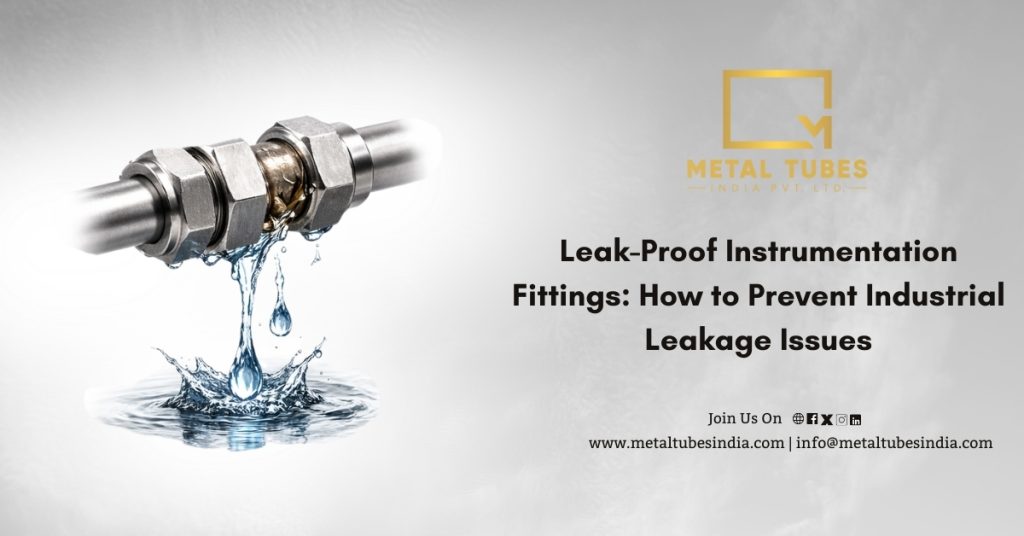
Leak-Proof Instrumentation Fittings: A Complete Guide by M Metal Tubes India Pvt Ltd Introduction Leak-Proof Instrumentation Fittings play a crucial role in preventing industrial leakage in manufacturing plants, oil & gas systems, chemical industries, and hydraulic applications. Even a small leak in fittings or valves can cause safety hazards, production downtime, and costly maintenance. At M Metal Tubes India Pvt Ltd, we understand that leak-proof performance is not just about components it is about reliability, safety, and long-term industrial efficiency. This guide explains the major causes of industrial leakage and how high-quality Leak-Proof Instrumentation Fittings help prevent leakage issues effectively. What Are Leak-Proof Instrumentation Fittings in Industrial Applications? Leak-Proof Instrumentation Fittings are precision-engineered components designed to ensure zero leakage under high pressure, temperature, and vibration conditions. These fittings create a strong and secure seal between tubes, pipes, and industrial equipment. They are widely used in: Oil & Gas Industries Chemical Plants Power Plants Marine Applications Pharmaceutical Industries Hydraulic & Pneumatic Systems Using premium Leak-Proof Instrumentation Fittings from trusted manufacturers like M Metal Tubes India Pvt Ltd improves operational safety and system performance. Major Causes of Industrial Leakage Issues in Fittings and Valves 1. Poor Quality Instrumentation Fittings Low-grade fittings often fail under pressure, leading to leakage and system damage. High-quality Leak-Proof Instrumentation Fittings are essential for long-term reliability. 2. Improper Installation of Fittings Incorrect tightening, misalignment, or wrong fitting selection can cause micro-leakage over time in industrial systems. 3. High Pressure and Temperature Conditions Industrial environments operate under extreme pressure and temperature. Without Leak-Proof Instrumentation Fittings, leakage risks increase significantly. 4. Corrosion and Material Failure Using low-quality materials in corrosive environments leads to cracks, seal damage, and fluid leakage. 5. Vibration in Industrial Machinery Continuous vibration can loosen joints and fittings, making leak-proof sealing difficult without precision-engineered instrumentation fittings. How Leak-Proof Instrumentation Fittings Prevent Industrial Leakage ✔️ Choose High-Quality Leak-Proof Instrumentation Fittings Selecting precision-engineered Leak-Proof Instrumentation Fittings is the most effective way to prevent industrial leakage. At M Metal Tubes India Pvt Ltd, our fittings are designed for: High pressure resistance Corrosion resistance Long durability Superior leak-proof sealing ✔️ Use the Right Material for Leak-Proof Performance Material selection directly impacts leakage prevention. Best materials used in Leak-Proof Instrumentation Fittings: Stainless Steel (SS 304 / SS 316) – High corrosion resistance Brass – Durable and cost-effective Alloy Steel – Suitable for high-pressure applications Proper material ensures leak-free performance in harsh industrial environments. ✔️ Proper Installation of Instrumentation Fittings Even the best Leak-Proof Instrumentation Fittings can leak if installed incorrectly. Installation tips: Use correct torque tightening Avoid over-tightening Ensure proper tube alignment Use skilled technicians This significantly reduces leakage risks in industrial pipelines and systems. ✔️ Regular Inspection and Maintenance of Industrial Fittings Preventive maintenance is essential to maintain leak-proof systems. Recommended practices: Regular inspection of fittings and valves Replacement of worn components Corrosion and crack inspection Periodic pressure testing Routine monitoring helps detect minor leakage before major industrial failure. Role of Precision Manufacturing in Leak-Proof Instrumentation Fittings Precision engineering is the foundation of Leak-Proof Instrumentation Fittings.As a leading manufacturer based in Mumbai, M Metal Tubes India Pvt Ltd uses advanced manufacturing processes, tight tolerances, and strict quality testing to ensure zero-leak performance, Precision manufacturing follows ASME industrial engineering standards to ensure leak-proof sealing and durability. Our manufacturing strengths include: High-precision machining Strict quality control Premium raw materials Industry-standard production Benefits of Using Leak-Proof Instrumentation Fittings in Industries 🔒 Enhanced Industrial Safety Prevents hazardous gas, oil, and chemical leakage. 💰 Reduced Maintenance Costs Leak-proof systems reduce downtime and repair expenses. ⚙️ Improved System Efficiency Leak-free fittings improve flow efficiency and operational stability. 📈 Extended Equipment Life Prevents corrosion damage and increases equipment lifespan. 🏭 Reliable Industrial Operations Ensures uninterrupted industrial production and performance. Why Choose M Metal Tubes India Pvt Ltd for Leak-Proof Instrumentation Fittings? M Metal Tubes India Pvt Ltd is a trusted manufacturer and supplier of high-quality Leak-Proof Instrumentation Fittings, valves, and industrial components designed for critical applications. Our product range includes: Instrumentation Fittings Needle Valves Manifold Valves Tube Fittings Air Headers Condensate Pots Industrial Valves & Components All products are manufactured as per international quality standards to deliver reliable and leak-proof industrial performance. Conclusion Industrial leakage can cause serious safety, financial, and operational risks. Using high-quality Leak-Proof Instrumentation Fittings, proper installation methods, and regular maintenance can effectively eliminate leakage issues. M Metal Tubes India Pvt Ltd provides precision-engineered Leak-Proof Instrumentation Fittings that ensure safety, durability, and long-term industrial efficiency. Investing in premium leak-proof fittings is the key to achieving zero leakage and reliable industrial systems.
What Are Double Ferrule Fittings? Working, Advantages & Applications
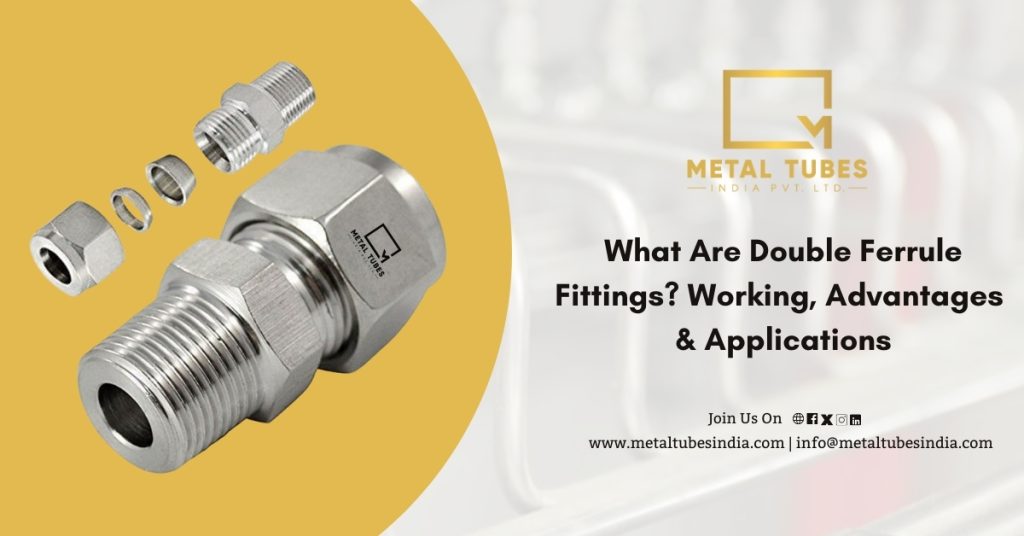
Introduction In industrial and instrumentation systems, safe and leak-free tube connections are very important. Even a small leakage can lead to safety issues, downtime, and money loss. Because of this, industries prefer reliable compression fittings that offer long-term performance. One such solution is double ferrule fittings, which are widely used in important applications. In this blog, we explain what they are, how they work, their advantages, and where industries commonly use them. What Are Double Ferrule Fittings? Double ferrule fittings are a type of compression fitting designed to connect tubing securely in instrumentation systems. These fittings use two ferrules (front and back) that work together to provide strong tube grip and reliable sealing. Manufacturers usually make these fittings using stainless steel, brass, or alloy steel. As a result, they perform well in high-pressure and vibration-prone environments. Learn more about our full range of instrumentation fittings Main Components of the Fitting A standard double ferrule fitting includes: Nut – Applies tightening force Back ferrule – Holds the tube firmly Front ferrule – Creates a leak-tight seal Body – Supports tube alignment Because each component has a specific role, the fitting delivers better safety and durability than single ferrule designs. How Does the Fitting Work? First, the tube is inserted fully into the fitting body.Next, when the nut is tightened, the back ferrule grips the tube securely.At the same time, the front ferrule seals against the body. As a result, the joint becomes leak-free and resistant to vibration. Therefore, these fittings are ideal for long-term industrial use without frequent maintenance. Advantages of Using Double Ferrule Fittings Leak-Free Performance The two-ferrule design provides reliable sealing even under high pressure. Strong Tube Holding The back ferrule prevents tube pull-out, improving system safety. Easy Installation No welding or special tools are required, which saves time during installation. Vibration Resistance These fittings perform well in systems with constant vibration or temperature changes. Long Service Life Reduced tube damage leads to lower maintenance costs over time. Explore stainless steel instrumentation fittings Industrial Applications Double ferrule fittings are commonly used in: Oil & Gas plants – For high-pressure fluid and gas lines Chemical & Petrochemical industries – For corrosive media handling Power plants – For steam and hydraulic systems Instrumentation & automation systems – For accurate measurement lines Pharmaceutical and food industries – For clean and hygienic connections Comparison: Double Ferrule vs Single Ferrule Feature Double Ferrule Single Ferrule Sealing reliability High Moderate Vibration handling Excellent Limited Tube grip Strong Average Suitable for high pressure Yes Not recommended Because of these differences, engineers prefer double ferrule fittings for critical systems. Why Choose M Metal Tubes India Pvt Ltd? At M Metal Tubes India Pvt Ltd, we supply precision-engineered instrumentation fittings that meet industry standards. Our products are trusted for their consistent quality and dependable performance. ✔ High-grade raw materials✔ Accurate manufacturing✔ Strict quality inspection✔ Suitable for critical industrial applications Contact M Metal Tubes India Pvt Ltd Conclusion To sum up, double ferrule fittings provide secure, leak-free, and long-lasting tube connections for industrial systems. Their strong grip, easy installation, and vibration resistance make them a reliable choice for demanding environments. If you need dependable instrumentation solutions, M Metal Tubes India Pvt Ltd is ready to support your requirements.
Trusted Instrumentation Fittings Supplier for Critical Industrial Applications

A trusted instrumentation fittings supplier plays a vital role in critical industrial environments where precision, safety, and reliability are essential. From controlling pressure and flow to maintaining accurate measurements, instrumentation fittings ensure smooth and secure system operation. Therefore, selecting the right supplier is crucial for industries where performance cannot be compromised. At M Metal Tubes India Pvt Ltd, we manufacture and supply high-quality instrumentation fittings engineered to deliver consistent performance under demanding industrial conditions. Why Trusted Instrumentation Fittings Are Critical in Industrial Operations Instrumentation fittings are used to create secure, leak-free connections between tubing, valves, and measuring instruments. As a result, they directly impact system accuracy and operational safety. High-quality instrumentation fittings help ensure: Accurate measurement and process control Safe performance under high pressure and temperature Long-term system reliability Reduced downtime and maintenance costs However, using low-grade fittings can lead to leakage, equipment failure, and safety hazards. Therefore, sourcing products from a trusted instrumentation fittings supplier is essential for uninterrupted industrial operations. What Makes a Trusted Instrumentation Fittings Supplier? Not every supplier meets the requirements of critical industrial applications. A trusted instrumentation fittings supplier must provide both product reliability and technical assurance. ✔ Precision Manufacturing of Instrumentation Fittings To begin with, fittings must be manufactured with tight tolerances to ensure proper sealing and easy installation. ✔ High-Grade Materials for Instrumentation Applications In addition, the use of stainless steel and corrosion-resistant alloys enhances durability in harsh environments. ✔ Compliance With International Standards Moreover, products should comply with ASTM, ASME, and DIN standards.(Outbound link example: ASTM standards / ASME standards) ✔ Quality Testing & Performance Validation Finally, each fitting must undergo strict testing for pressure resistance and leak prevention. At M Metal Tubes India Pvt Ltd, every instrumentation fitting is produced following these quality benchmarks. Instrumentation Fittings Supplier for Critical Industrial Applications As a trusted instrumentation fittings supplier, our products are widely used in industries where operational reliability is non-negotiable. 🔹 Oil & Gas Industry Instrumentation fittings designed for high pressure, corrosive media, and extreme temperatures. 🔹 Chemical & Petrochemical Plants Ensuring safe handling and transfer of aggressive chemicals with leak-proof performance. 🔹 Power Generation Industry Supporting accurate monitoring systems in thermal and renewable power plants. 🔹 Pharmaceutical & Process Industries Maintaining cleanliness, precision, and consistency in sensitive environments. 🔹 Marine & Offshore Applications Built to withstand saltwater corrosion and harsh operating conditions. Our Instrumentation Fittings Product Range As a leading instrumentation fittings manufacturer in India, we offer a complete range of industrial solutions, including: Tube fittings Compression fittings Elbow, tee, and union fittings High-pressure instrumentation fittings Stainless steel instrumentation fittings Each product is engineered for strength, safety, and long service life. (Internal link example: Instrumentation Fittings Product Page)(Internal link example: Stainless Steel Instrumentation Tubes Page) Why Choose M Metal Tubes India Pvt Ltd as Your Instrumentation Fittings Supplier? We are not just a supplier. Instead, we work as a long-term industrial partner. ✔ Proven manufacturing expertise✔ Consistent and reliable quality✔ On-time project delivery✔ Custom solutions for specific applications✔ Trusted by engineers and procurement professionals Our commitment is simple: to deliver instrumentation fittings that perform flawlessly in critical applications. Final Thoughts In industries where failure is not an option, selecting a trusted instrumentation fittings supplier is a strategic decision. With a strong focus on quality, compliance, and customer satisfaction, M Metal Tubes India Pvt Ltd continues to be a reliable name in industrial instrumentation solutions. 📞 Call to Action Looking for a trusted instrumentation fittings supplier for your next project?Contact M Metal Tubes India Pvt Ltd today for expert support and dependable supply. 👉 Contact us for instrumentation fittings👉 Request a quote today
Flare Fittings vs Compression Fittings | Key Differences Explained

Discover the main differences between flare fittings and compression fittings, their uses, installation benefits, and which one fits your application best. Learn more with M Metal Tubes India Pvt Ltd.