
Inside Our Manufacturing Process: How M Metal Tubes India Ensures Zero-Defect Quality
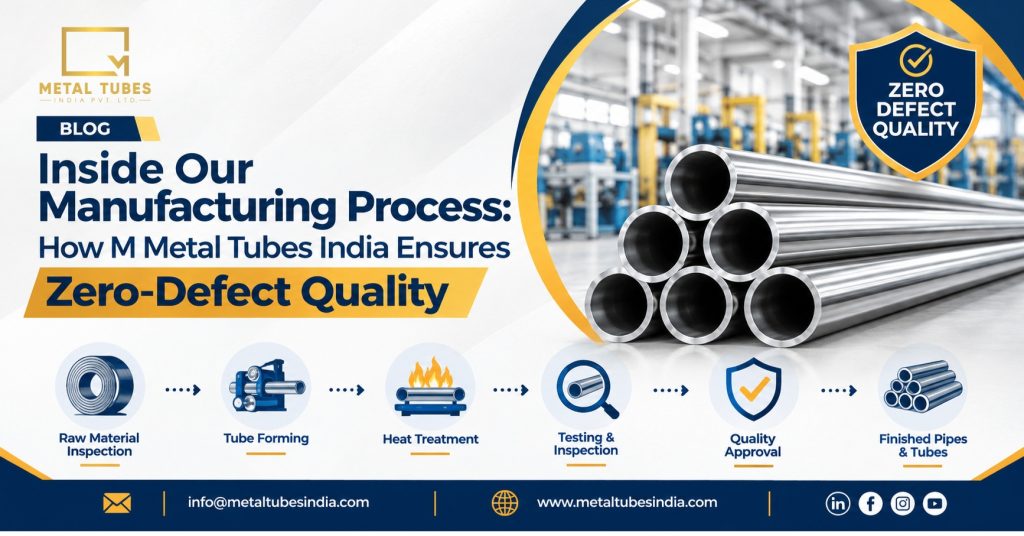
At M Metal Tubes India, our manufacturing process zero-defect quality standard shapes everything we do. First, we select the right raw material. Next, we form, treat, and test every tube with precision. As a result, our customers receive tubes they can rely on, batch after batch. In this blog, we take you inside our production floor. You’ll see exactly how we manufacture stainless steel, carbon steel, and alloy steel tubes — and why industries across oil & gas, power generation, and petrochemicals trust us with their most critical projects. Why Zero-Defect Quality Matters in Steel Tube Manufacturing A single defective tube can compromise an entire pipeline, boiler, or heat exchanger system. Therefore, our customers cannot afford to take chances with quality. For this reason, we don’t treat quality control as a final checkpoint. Instead, we build it into every stage of production. Many manufacturers call this approach “quality by design,” and it forms the foundation of our complete product range at M Metal Tubes India. Step 1: Raw Material Selection and Testing Every tube starts with the right raw material. First, our team sources billets and coils only from approved and certified suppliers. Before any material enters production, we run it through: Chemical composition testing to confirm the correct alloy grade Mechanical property verification for strength and ductility Surface inspection to rule out cracks, pits, or inclusions Consequently, if a batch doesn’t meet our internal benchmarks, we reject it immediately. This first checkpoint alone prevents a large share of potential defects before production even begins. Step 2: Precision Tube Forming Once the raw material clears inspection, it moves into forming. Depending on the specification, we use either: Seamless tube manufacturing, where we pierce and draw solid billets into hollow tubes without a weld seam Welded (ERW) tube manufacturing, where we roll and fuse steel strips using controlled high-frequency welding Our machines maintain tight tolerances on outer diameter (OD), wall thickness, and length. Because even a small deviation here can affect performance downstream, experienced operators monitor this stage closely during every shift. Step 3: Heat Treatment for Strength and Durability After forming, tubes go through heat treatment — annealing, normalizing, or quenching and tempering, depending on the grade and end application. Heat treatment achieves two important goals. First, it relieves internal stresses created during forming. Second, it enhances mechanical strength, corrosion resistance, and durability. This step becomes critical for tubes operating in high-pressure or high-temperature environments, such as our boiler and heat exchanger tubes. Step 4: Dimensional and Surface Finishing Next, every tube passes through finishing operations. This stage includes: Straightening to correct any bends from forming or heat treatment Cutting to exact length as per customer specification Surface finishing, including pickling, polishing, or bright annealing, depending on the application At this point, our quality team re-checks dimensions against the original customer specification sheet. As a result, nothing moves forward without matching the exact requirement. Step 5: Rigorous Testing Before Dispatch This is where our manufacturing process zero-defect quality commitment truly comes to life. Before we approve any tube for dispatch, we put it through a series of rigorous quality tests to check strength, pressure resistance, and any hidden surface or internal flaws. Only tubes that pass every test move to the next stage. Meanwhile, we set aside or reject anything that doesn’t meet our standard — no exceptions. Step 6: Final Inspection and Documentation Before dispatch, we run each batch of tested tubes through a final visual and dimensional inspection. In addition, we prepare complete test certificates and material traceability documentation, so customers know exactly what they’re receiving — and can trace it back to the original raw material batch if needed. This transparency explains why EPC contractors, fabricators, and industrial buyers continue to choose our seamless and welded tube solutions for repeat orders. Manufacturing Process Zero-Defect Quality: What Makes It Different Here’s what sets our process apart: Multi-stage inspection, not just a final check Experienced engineers overseeing every production stage Fully tested tubes with traceable documentation from raw material to finished product Consistent tolerances across every batch, not just samples Overall, zero-defect quality isn’t a slogan for us. Instead, it’s a system — built stage by stage, checked at every point, and backed by documentation you can trust. Frequently Asked Questions What types of steel tubes does M Metal Tubes India manufacture? We manufacture seamless and welded (ERW) tubes in stainless steel, carbon steel, and alloy steel grades. Consequently, our tubes serve industries like oil & gas, power, petrochemicals, and infrastructure. How does M Metal Tubes India ensure quality at every stage? We run quality checks at every stage of production — raw material testing, forming, heat treatment, finishing, and final testing — rather than only at the end. Are all tubes tested before dispatch? Yes. We test every tube rigorously and inspect it fully before dispatch. Therefore, only fully tested, defect-free tubes reach our customers. Conclusion From raw material to final dispatch, we design every stage of our production around one commitment: delivering manufacturing process zero-defect quality to every customer, every time. This is the standard M Metal Tubes India holds itself to — and it explains why our tubes perform reliably in the industries that can least afford failure. Looking for steel tubes manufactured to the highest quality standards? Contact M Metal Tubes India today to discuss your requirement.
Manifold Valves Manufacturer in India: Uses, Selection Guide & Benefits
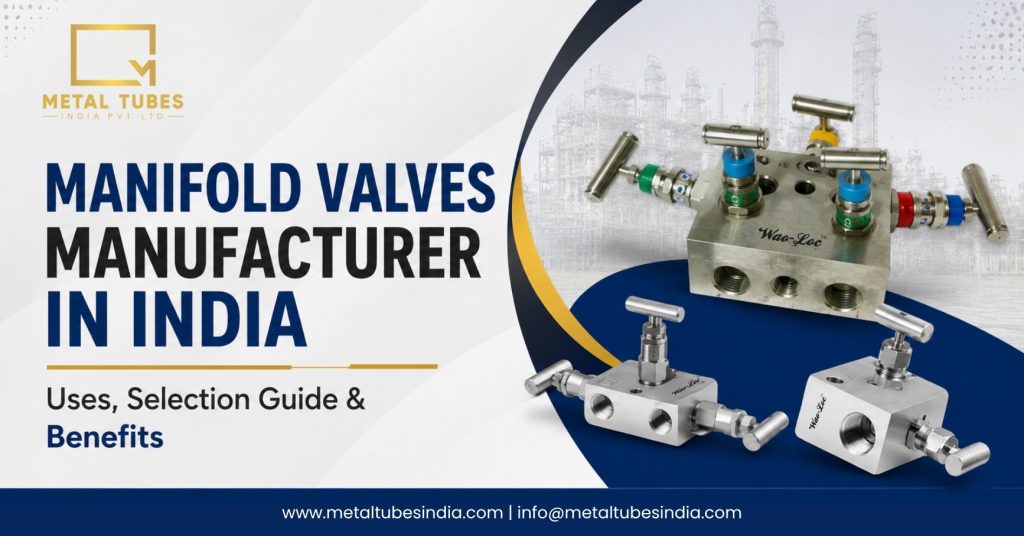
M Metal Tubes India Pvt Ltd is a leading manifold valves manufacturer in India, supplying precision instrumentation valves to industries across the country. Manifold valves protect instruments, control flow, and make maintenance safer and faster. If you are searching for a reliable manifold valves manufacturer in India, this guide covers everything you need. You will learn what manifold valves do, the types available, how to choose the right one, and why they matter for your plant. Alongside manifolds, we also manufacture needle valves, ball valves, condensate pots, and instrumentation fittings. Let’s break this down step by step. What Is a Manifold Valve? A manifold valve is a compact assembly of valves. It connects instruments, like pressure gauges or transmitters, to the main process line. In simple words, it acts as a bridge. It links your measuring instrument to the pipeline safely. At the same time, it allows easy isolation, calibration, and maintenance without shutting down the entire system. According to the International Society of Automation (ISA), correctly specified instrument isolation valves are essential for accurate process measurement and plant safety. That’s why manifold valves are widely used in oil and gas, power plants, chemical processing, and pharmaceutical industries. Why Choose a Trusted Manifold Valve Manufacturer? Manifold valves are not just connectors. They serve several important functions on the plant floor, so choosing an experienced manifold valves manufacturer in India matters. Here’s why manifold valves matter: Instrument protection – They shield delicate instruments from pressure spikes. Easy isolation – Operators can isolate instruments for maintenance without stopping the process. Leak prevention – A compact, single-block design reduces potential leak points. Space saving – One manifold replaces multiple individual valves and fittings. Improved safety – Operators can safely vent, equalize, or calibrate instruments. Because of these benefits, manifold valves have become a standard requirement across most instrumentation systems. Types of Manifold Valves We Manufacture in India Different applications need different manifold configurations. As a dedicated manifold valves manufacturer in India, we produce the following types: 1. 2-Valve Manifold This is the simplest configuration. It is mainly used with pressure transmitters. It allows isolation and venting of the process line. 2. 3-Valve Manifold This type is ideal for differential pressure (DP) transmitters. It includes two isolation valves and one equalizing valve. As a result, it allows safe zero calibration. 3. 5-Valve Manifold This is the most advanced configuration. It offers two isolation valves, two vent valves, and one equalizing valve. Consequently, it provides maximum flexibility and safety for high-pressure DP applications. Each type is available in various materials, including stainless steel and carbon steel, depending on your process requirements. You can pair these with our needle valves for finer flow control, or our ball valves for quick shut-off. Key Applications of Manifold Valves Manifold valves are used across a wide range of industries. Some common applications include: Oil and gas refineries Power generation plants Chemical and petrochemical units Pharmaceutical manufacturing Water treatment plants Marine and offshore platforms In each of these industries, manifold valves ensure accurate readings and safer instrument handling. Many of these plants also rely on our condensate pots to protect pressure instruments in steam lines. How to Select the Right Manifold Valve Choosing the correct manifold valve is essential. Otherwise, it can affect system performance and safety. Here’s a simple selection guide: Identify your instrument type – Pressure gauge, transmitter, or DP transmitter. Check the pressure rating – Match the manifold’s rating with your process line. Select the right material – Stainless steel works well for corrosive environments. Consider the connection type – NPT, BSP, or flanged, based on your piping system. Choose the valve configuration – 2-valve, 3-valve, or 5-valve, depending on your application. If you’re unsure which configuration suits your process, our engineering team at M Metal Tubes India Pvt Ltd can help you decide. Benefits of Choosing M Metal Tubes India Pvt Ltd as Your Manifold Valve Manufacturer As a trusted manifold valves manufacturer in India, we focus on quality, precision, and reliability. Here’s what sets us apart: Premium raw materials – We use high-grade stainless steel and alloy materials. Precision engineering – Every valve undergoes strict quality checks. Custom solutions – We manufacture as per your exact specifications. Wide product range – Alongside manifolds, we also supply needle valves, ball valves, condensate pots, and instrumentation fittings. Pan-India supply – We serve clients across multiple industries and states. Because of this, plants across India trust us for their instrumentation valve needs. Final Thoughts Manifold valves are essential components in any instrumentation system. They protect instruments, improve safety, and simplify maintenance. Therefore, choosing the right manifold valves manufacturer in India matters just as much as choosing the right valve type. At M Metal Tubes India Pvt Ltd, we combine engineering expertise with quality manufacturing to deliver manifold valves you can rely on. Looking for a dependable manifold valves manufacturer in India? Contact M Metal Tubes India Pvt Ltd today for a quote. Frequently Asked Questions Q1. What is the difference between a 2-valve and 5-valve manifold? A 2-valve manifold offers basic isolation and venting. A 5-valve manifold adds equalizing and dual venting, making it suitable for high-pressure DP transmitter applications. Q2. Which material is best for manifold valves? Stainless steel is the most common choice. It resists corrosion and performs well in high-pressure, high-temperature environments. Q3. Do you provide custom manifold valve solutions? Yes. As an experienced manifold valves manufacturer in India, M Metal Tubes India Pvt Ltd manufactures manifold valves as per client-specific pressure ratings, connection types, and material requirements.
Types of Male Connectors: A Complete Guide to Instrumentation Fittings
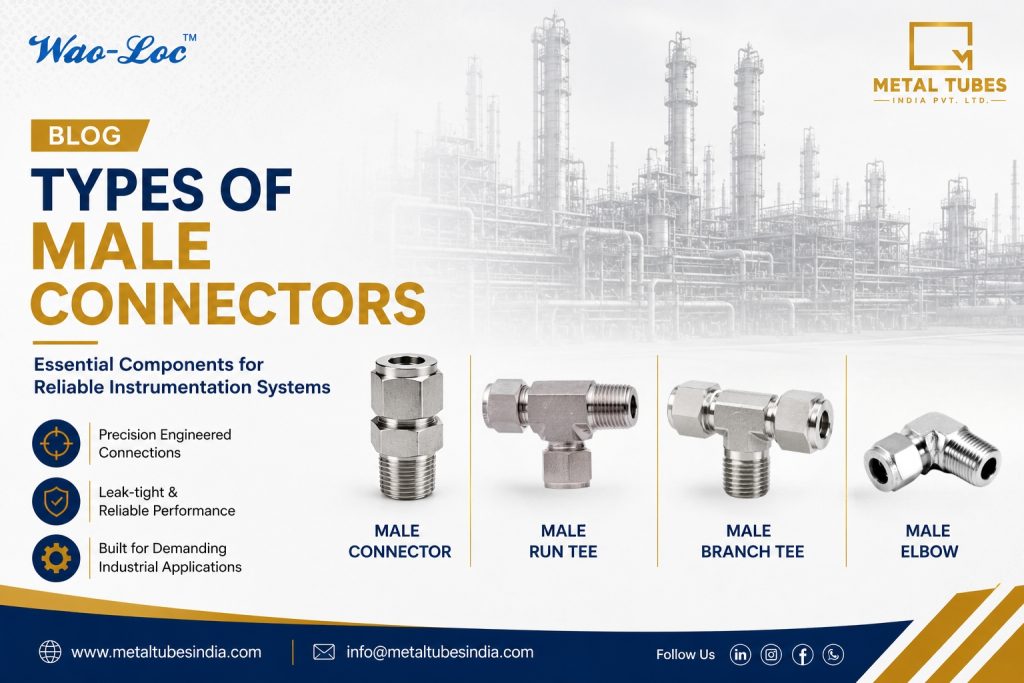
If you’re comparing the different types of male connectors for your next project, you’re in the right place. Choosing the correct connector matters it’s one of the most important decisions an engineer makes when building a leak-proof instrumentation system. So, where do you start? Male connectors form the backbone of any instrumentation tube fittings setup. They connect tubing to valves, gauges, and manifolds. And they do it with precision. At M Metal Tubes India Pvt Ltd, we manufacture a full range of stainless steel male connectors. We build them for oil & gas, petrochemical, power, pharmaceutical, and process industries. In this guide, we explain all six types of male connectors, their applications, and how to pick the right one. Whether you need instrumentation fittings male connectors, tube-to-thread adapters, or specialized bulkhead and tee connectors, this blog has you covered. What Is a Male Connector in Instrumentation Fittings? A male connector joins a tube to a female-threaded port on a valve or instrument. One end grips the tubing through a compression fitting. The other end has male threads NPT, BSP, or BSPP that screw directly into equipment. These threads follow standard pipe thread specifications set by bodies like ASME, which define dimensions and tolerances for interchangeable fittings. Male connectors matter because they: Create a leak-tight seal, even under high pressure and vibration Allow quick assembly and disassembly for maintenance Remove the need for welding in critical instrumentation lines Resist corrosion when made from stainless steel Now, let’s look at the six main types of male connectors and where you’ll use each one. The 6 Main Types of Male Connectors in Instrumentation Fittings Below, we break down each of the six types of male connectors you’ll find in a typical instrumentation fittings catalog. 1. Male Connector (Tube OD x Male NPT) Engineers use the Male Connector (Tube OD x Male NPT) more than any other fitting in instrumentation tube fittings. One end connects to the tube’s outer diameter through a compression ferrule. The other end carries National Pipe Thread (NPT), which screws into instruments, valves, or manifolds. Key applications: Connecting instrumentation tubing to pressure gauges Joining tubing to valve bodies in process skids Serving oil & gas and chemical plants worldwide We offer this fitting in multiple tube OD sizes — 1/4″, 3/8″, 1/2″, and more. We also match it to various NPT thread sizes so it fits international piping standards. 2. Male Connector (BSP/BSPP) Some regions follow British Standard Pipe threads instead of NPT. That’s where the Male Connector (BSP/BSPP) comes in. BSP (tapered) and BSPP (parallel) threads dominate European and Middle Eastern instrumentation systems. Key applications: Export projects that require BSP-standard fittings Instrumentation systems built to DIN/ISO standards Setups where an O-ring seal (BSPP) gives a more reliable connection Not sure which thread type you need? Your plant’s regional piping code decides it. Our engineering team can help you choose correctly. 3. Male Elbow 90 Degree Space is often tight in a control panel. That’s exactly where the Male Elbow 90 Degree connector helps. It lets tubing change direction by 90 degrees while connecting to a threaded port — no extra bending required. Key applications: Panel-mounted instrumentation in tight spaces Reducing tube bends, which lowers stress on the tubing Connecting tubing to instruments mounted at right angles As a result, using a male elbow 90 degree connector saves installation time. It also improves the overall strength of the tube run. 4. Male Bulkhead Connector Need to pass tubing through a wall or panel? Use a Male Bulkhead Connector. It maintains a leak-proof seal on both sides, thanks to a locknut and a threaded body that passes through a drilled hole. Key applications: Panel mounting in control cabinets and instrument enclosures Passing tubing through pressure vessel walls Vibration-resistant connections in demanding environments In fact, this is one of the most requested instrumentation fittings male connector types among OEMs who build compact instrumentation panels. 5. Male Run Tee The Male Run Tee connector has three ports. Two tube-end ports sit in a straight line the “run.” The third port carries a male thread for a branch connection. This design lets a straight tube run continue without interruption, while still offering a threaded point for a gauge or transmitter. Key applications: Installing pressure gauges mid-line, without breaking the tube run Adding branch connections for instrumentation sensors Cutting down the number of fittings in complex tube layouts 6. Male Branch Tee The Male Branch Tee looks similar to the run tee. However, the male-threaded port sits differently. It typically creates a perpendicular connection, while the tube run stays on the same centerline. Use it when you need the threaded port to sit off to the side, not in line with the main run. Key applications: Multi-point instrumentation sampling systems Adding a threaded takeoff point in compact panel layouts Creating a perpendicular branch off a continuous tube line Male Run Tee vs Male Branch Tee What’s the Difference? Port orientation makes the difference. A run tee keeps the branch port in line with the flow path. This makes mid-line instrument installation easy. A branch tee, on the other hand, offsets the threaded port. So, it gives installers more flexibility in tight panel layouts. Why Choose Stainless Steel Male Connectors? We manufacture most instrumentation fittings including all six connector types above in stainless steel (SS 316/316L, SS 304). Why? Because instrumentation systems face tough operating conditions. Stainless steel male connectors deliver: Corrosion resistance in chemical, marine, and offshore environments High pressure and temperature tolerance for critical process lines Long service life with minimal maintenance Compliance with international instrumentation standards So, if you’re sourcing instrumentation fittings for a critical application, stainless steel is almost always the smart choice. How to Choose the Right Type Among the Different Male Connectors Before you order instrumentation fittings male connectors, check these five points: Tube size and thread size — Match the tube OD and thread type (NPT, BSP, or BSPP) to your existing system. Application layout — Choose elbows
Why High-Quality Instrumentation Fittings & Valves Are Essential for Industrial Systems
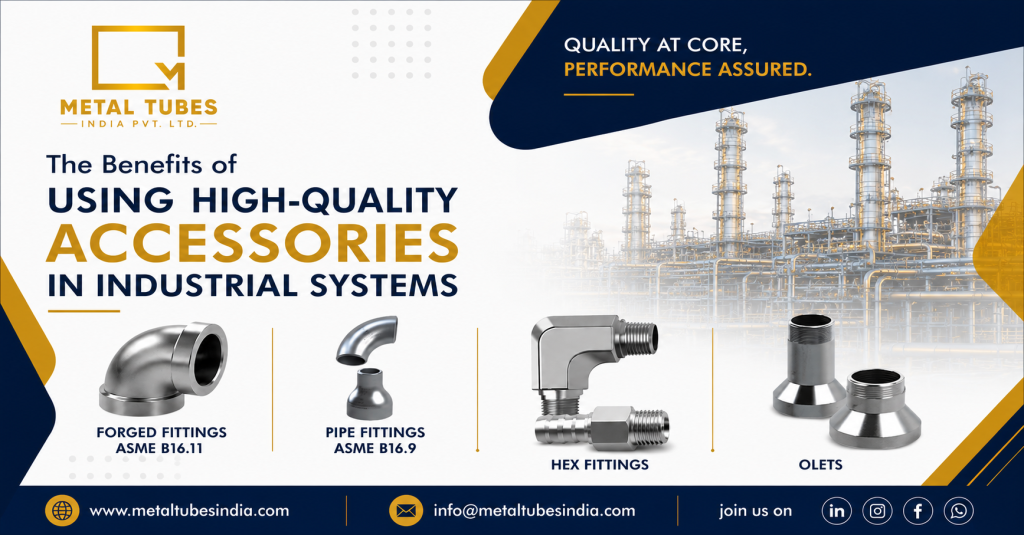
Industrial process systems demand precision, reliability, and safety. High Quality Instrumentation Fittings play a vital role in ensuring leak-proof connections, accurate flow control, and long-term operational efficiency. From oil & gas plants to pharmaceutical facilities, these small yet essential components help keep industrial systems running safely and efficiently. At M Metal Tubes India Pvt. Ltd., we manufacture precision-engineered instrumentation fittings, valves, stainless steel tubes, pipe fittings, manifolds, flanges, and accessories that meet the demanding requirements of modern industries. Our products are built to deliver reliable performance in high-pressure and corrosive environments. Why High Quality Instrumentation Fittings Are Important Instrumentation fittings connect critical components in industrial systems. They ensure the smooth flow of liquids, gases, and chemicals while maintaining pressure integrity. Using High Quality Instrumentation Fittings offers several advantages: Leak-proof connections Reliable performance Improved safety Longer service life Reduced maintenance costs Choosing premium fittings helps prevent system failures and costly downtime. Benefits of High Quality Instrumentation Fittings 1. Improved System Reliability Reliable fittings reduce the risk of leaks and pressure loss. High-quality materials and precision manufacturing ensure consistent performance, even under demanding operating conditions. 2. Better Safety Industrial systems often operate under high pressure and temperature. Quality instrumentation fittings help prevent leakage, protecting both personnel and equipment. 3. Lower Maintenance Costs Premium fittings last longer and require fewer replacements. This reduces maintenance expenses and minimizes unexpected shutdowns. 4. Excellent Corrosion Resistance Stainless steel instrumentation fittings provide excellent resistance to corrosion, making them suitable for chemical, pharmaceutical, and marine applications. 5. Higher Operational Efficiency Precision-engineered fittings ensure smooth flow and accurate pressure control, helping industrial systems operate more efficiently. Applications of High Quality Instrumentation Fittings High Quality Instrumentation Fittings are widely used across various industries, including: Oil & Gas Petrochemical Plants Chemical Processing Pharmaceutical Manufacturing Power Generation Water Treatment Plants Food & Beverage Industry Process Automation Systems These industries require dependable components that deliver consistent performance in challenging environments. Why Choose M Metal Tubes India Pvt. Ltd.? M Metal Tubes India Pvt. Ltd. is a trusted manufacturer and supplier of high-quality instrumentation products for industrial applications. Our product range includes: Instrumentation Tube Fittings Stainless Steel Tubes Needle Valves Ball Valves Non Return Valves (NRV) Pipe Fittings Manifold Valves Flanges Air Headers Condensate Pots Every product is manufactured using premium-grade materials and undergoes strict quality checks to ensure durability, precision, and reliable performance. Industries We Serve Our instrumentation products are trusted by customers across multiple industries, including: Refineries Petrochemical Plants Chemical Industries Pharmaceutical Companies Power Plants Water & Wastewater Treatment Marine & Offshore Engineering & EPC Projects We are committed to delivering products that meet the highest standards of quality and performance. Conclusion Choosing High Quality Instrumentation Fittings is an investment in the safety, efficiency, and reliability of your industrial operations. Premium fittings reduce maintenance costs, improve system performance, and ensure long-term durability. At M Metal Tubes India Pvt. Ltd., we provide precision-engineered instrumentation fittings, valves, tubes, and accessories designed to meet the needs of modern industries. Whether you operate in oil & gas, chemical processing, pharmaceuticals, or power generation, our products help keep your systems running smoothly and efficiently. Contact our team today to learn more about our complete range of instrumentation solutions.
SS304 vs SS316 Instrumentation Fittings: Complete Comparison Guide for Industrial Applications
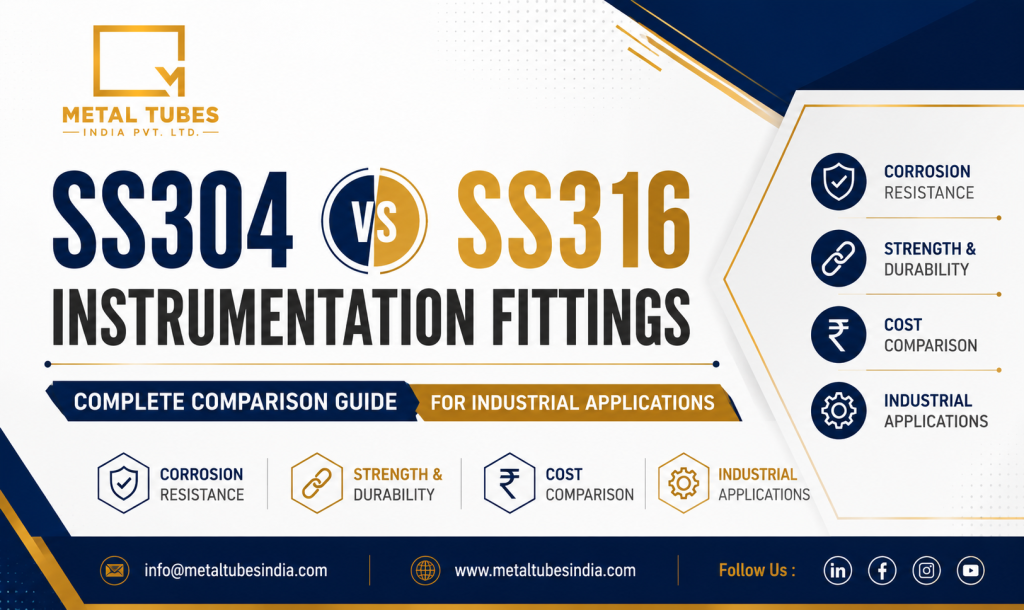
The SS304 vs SS316 Instrumentation Fittings comparison is one of the most important considerations when selecting components for industrial instrumentation systems. Both stainless steel grades offer excellent durability and reliability. However, they differ in corrosion resistance, chemical composition, cost, and applications. Understanding the differences between SS304 and SS316 instrumentation fittings can help engineers, procurement teams, and plant operators choose the right material for long-term performance. In this guide, we will compare SS304 vs SS316 instrumentation fittings in terms of corrosion resistance, strength, durability, temperature performance, cost, and industrial applications. Moreover, we will explain when to choose SS304 and when SS316 becomes the better investment. By the end of this article, you will have a clear understanding of which material best suits your operational requirements. What Are Instrumentation Fittings? Instrumentation fittings are precision-engineered components used to connect, control, and direct the flow of liquids and gases within instrumentation systems. These fittings play a critical role in maintaining leak-free performance, ensuring system reliability, and supporting safe operations. Common types of instrumentation fittings include: Tube Fittings Double Ferrule Fittings Compression Fittings Elbows Tees Unions Reducers Adapters As a result, these fittings are widely used in oil and gas, petrochemical, chemical processing, pharmaceutical, and power generation industries. Understanding Stainless Steel Grades Before comparing SS304 and SS316 instrumentation fittings, it is important to understand the role of stainless steel in industrial systems. Stainless steel contains chromium, which forms a protective oxide layer on the surface. Consequently, this layer helps prevent rust and corrosion. Furthermore, additional alloying elements can improve performance in challenging environments. The two most popular grades for instrumentation fittings are SS304 and SS316. Although they appear similar, their performance differs significantly under certain operating conditions. What Is SS304 Stainless Steel? SS304 is an austenitic stainless steel that contains approximately 18–20% chromium and 8–10.5% nickel. Because of its balanced properties and cost-effectiveness, it has become one of the most widely used stainless steel grades worldwide. Benefits of SS304 Instrumentation Fittings Excellent corrosion resistance in normal environments Good mechanical strength Easy fabrication and welding Cost-effective solution Widely available in global markets Therefore, SS304 instrumentation fittings are suitable for many general industrial applications. What Is SS316 Stainless Steel? SS316 is an upgraded stainless steel grade that contains molybdenum in addition to chromium and nickel. The presence of molybdenum significantly improves corrosion resistance, especially in chloride-rich and chemically aggressive environments. Benefits of SS316 Instrumentation Fittings Superior resistance to corrosion Better protection against chlorides Longer service life Excellent performance in marine applications Enhanced resistance to chemicals and acids Consequently, SS316 instrumentation fittings are often selected for demanding industrial environments. SS304 vs SS316 Instrumentation Fittings: Key Differences 1. Chemical Composition The primary difference between SS304 and SS316 instrumentation fittings is the addition of molybdenum in SS316. Property SS304 SS316 Chromium 18–20% 16–18% Nickel 8–10.5% 10–14% Molybdenum No 2–3% As a result, SS316 offers better protection against corrosion and pitting. 2. Corrosion Resistance Corrosion resistance is often the deciding factor when selecting instrumentation fittings. SS304 performs well in freshwater and general industrial environments. However, it may experience pitting corrosion when exposed to chlorides or saltwater. On the other hand, SS316 performs exceptionally well in coastal, marine, and chemical processing environments. Therefore, industries that face harsh conditions often prefer SS316. 3. Mechanical Strength Both materials provide excellent strength and durability. In most industrial applications, the difference in mechanical performance is minimal. Nevertheless, SS316 generally offers slightly better performance under aggressive operating conditions. 4. Temperature Performance Instrumentation systems frequently operate at elevated temperatures. While both grades perform well, SS316 offers improved resistance in high-temperature environments. Therefore, SS316 is often selected for applications involving extreme process conditions. 5. Cost Comparison Cost is another important factor when comparing SS304 vs SS316 instrumentation fittings. SS304 is more affordable because it contains lower levels of alloying elements. Consequently, it is commonly used in projects where budget is a major consideration. However, SS316 often delivers greater long-term value due to reduced maintenance costs and longer service life. Applications of SS304 Instrumentation Fittings SS304 instrumentation fittings are commonly used in: Food processing plants Water treatment facilities HVAC systems Pharmaceutical equipment General manufacturing industries Because these environments are relatively less corrosive, SS304 often provides sufficient performance. Applications of SS316 Instrumentation Fittings SS316 instrumentation fittings are commonly used in: Offshore oil and gas platforms Marine industries Petrochemical plants Chemical processing facilities Desalination plants Fertilizer industries Since these environments are highly corrosive, SS316 provides superior reliability and durability. How to Choose Between SS304 and SS316 Instrumentation Fittings Choose SS304 if: Your environment has low corrosion risk. Budget optimization is important. Freshwater applications are involved. General industrial performance is sufficient. Choose SS316 if: Chlorides are present. The installation is near coastal areas. Chemical exposure is significant. Maximum service life is required. Downtime must be minimized. Therefore, the final decision should be based on operating conditions rather than initial cost alone. Frequently Asked Questions Is SS316 better than SS304? SS316 offers better corrosion resistance. However, SS304 may be the better choice for standard industrial applications due to its lower cost. Why is SS316 more expensive? SS316 contains molybdenum and higher nickel content. Consequently, its production cost is higher than SS304. Can SS304 be used in marine environments? While SS304 can be used in some marine applications, SS316 is generally recommended because of its superior resistance to saltwater corrosion. Which stainless steel grade lasts longer? In corrosive environments, SS316 typically lasts longer and requires less maintenance. Conclusion When comparing SS304 vs SS316 instrumentation fittings, there is no universal winner. Instead, the best choice depends on your operating environment, process requirements, and budget. If you need a cost-effective solution for general industrial applications, SS304 instrumentation fittings are an excellent option. However, if your system operates in marine, chemical, offshore, or highly corrosive environments, SS316 instrumentation fittings provide greater protection, longer service life, and improved reliability. Ultimately, selecting the right material helps ensure leak-free performance, enhanced safety, and lower maintenance costs throughout the life of the instrumentation system.
Complete Guide to Instrumentation Tube Fittings
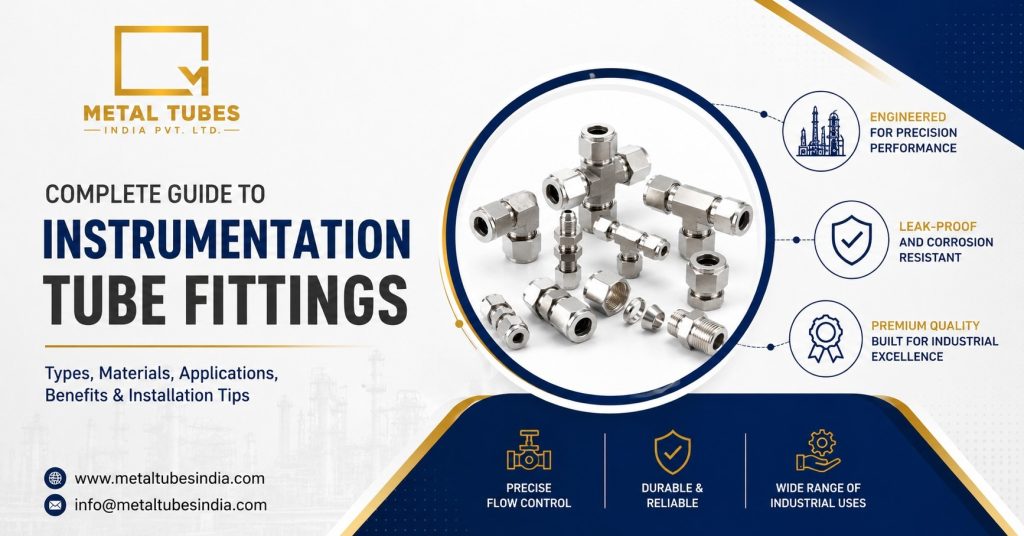
Instrumentation tube fittings play a critical role in industrial piping and fluid control systems. These fittings help create secure, leak-proof connections in industries where precision, safety, and reliability are essential. From oil and gas plants to chemical processing units, instrumentation fittings are widely used to maintain smooth flow control and pressure handling. Choosing the right fittings can improve system efficiency, reduce leakage risks, and increase operational safety. In this complete guide, we will explain everything you need to know about instrumentation tube fittings, including their types, materials, applications, advantages, installation methods, and selection criteria. What Are Instrumentation Tube Fittings? Instrumentation tube fittings are mechanical components used to connect tubes, pipes, and equipment in industrial instrumentation systems. These fittings ensure a tight and secure connection while handling gases, liquids, hydraulic fluids, or chemical media under pressure. They are specially designed for high-pressure and high-temperature applications where leak-free performance is necessary. Instrumentation tube fittings are commonly used in: Oil & Gas Industry Chemical Processing Plants Power Generation Units Pharmaceutical Industry Petrochemical Plants Food Processing Industry Semiconductor Manufacturing Hydraulic and Pneumatic Systems Why Instrumentation Tube Fittings Are Important Industrial systems operate under extreme pressure and temperature conditions. Even a minor leakage can lead to production loss, safety hazards, or equipment failure. High-quality instrumentation tube fittings help industries: Prevent fluid leakage Improve operational safety Maintain pressure integrity Reduce maintenance costs Ensure long-term reliability Improve system efficiency These fittings are essential for industries that require precision flow control and accurate instrumentation performance. Types of Instrumentation Tube Fittings There are several types of instrumentation tube fittings available for different industrial applications. 1. Compression Tube Fittings Compression fittings are one of the most commonly used instrumentation fittings. They use ferrules to create a strong mechanical seal around the tube. Key Features: Leak-proof sealing Easy installation Excellent vibration resistance Suitable for high-pressure systems Common Applications: Hydraulic systems Gas distribution lines Chemical plants 2. Elbow Fittings Elbow fittings are used to change the flow direction of the tubing system. Types: 45-degree elbow 90-degree elbow These fittings help save installation space and improve pipeline routing. 3. Tee Fittings Tee fittings are used to divide or combine fluid flow in multiple directions. Benefits: Efficient branch connections Compact system design Better flow distribution 4. Union Fittings Union fittings connect two tubes together and allow easy disassembly during maintenance. Advantages: Quick maintenance access Reusable connection Strong sealing performance 5. Reducer Fittings Reducer fittings connect tubes of different sizes while maintaining smooth fluid flow. They are widely used in systems where pressure or flow adjustments are required. Single Ferrule vs Double Ferrule Fittings Understanding the difference between single ferrule and double ferrule fittings is important when selecting instrumentation fittings. Feature Single Ferrule Double Ferrule Sealing Mechanism One ferrule Front and back ferrule Vibration Resistance Moderate Excellent Leak Protection Good Superior Installation Simple More secure Industrial Usage General applications Critical high-pressure systems Double ferrule fittings are widely preferred in demanding industrial environments because they provide stronger grip and better leak protection. Materials Used in Instrumentation Tube Fittings Material selection is critical for ensuring corrosion resistance and long service life. Stainless Steel Instrumentation Fittings Stainless steel fittings are highly popular because of their strength and corrosion resistance. Common Grades: SS 304 SS 316 SS 316L Benefits: Excellent corrosion resistance High temperature tolerance Long durability Low maintenance Brass Instrumentation Fittings Brass fittings are commonly used in low-pressure and non-corrosive applications. Advantages: Cost-effective Good machinability Suitable for water and air systems Alloy Steel Fittings Alloy steel fittings are used in high-pressure industrial environments. Features: Superior mechanical strength Excellent pressure handling Better wear resistance Applications of Instrumentation Tube Fittings Instrumentation tube fittings are widely used across various industries. Oil and Gas Industry These fittings are used in offshore platforms, refineries, and gas distribution systems where leak-proof performance is essential. Chemical Processing Plants Chemical industries require corrosion-resistant fittings for handling aggressive fluids and chemicals. Power Generation Plants Instrumentation fittings help maintain steam, hydraulic, and cooling systems in thermal and nuclear power plants. Pharmaceutical Industry High-purity fittings are used to maintain contamination-free fluid transfer systems. Food and Beverage Industry Sanitary instrumentation fittings support hygienic processing systems and clean fluid transportation. Benefits of High-Quality Instrumentation Tube Fittings Using premium-quality instrumentation fittings offers several advantages. Leak-Free Performance Properly designed fittings minimize leakage risks in high-pressure systems. High Corrosion Resistance Stainless steel fittings perform well in harsh industrial environments. Long Service Life Durable fittings reduce replacement frequency and maintenance expenses. Easy Installation Modern instrumentation fittings support quick and reliable installation. Better Safety Leak-proof connections improve workplace safety and reduce accident risks. How to Choose the Right Instrumentation Tube Fittings Selecting the correct fitting depends on multiple industrial factors. Consider Operating Pressure Choose fittings that can safely handle the system pressure. Evaluate Temperature Conditions High-temperature applications require heat-resistant materials. Check Chemical Compatibility Ensure the fitting material is compatible with the process media. Verify Tube Size and Thickness Improper sizing can lead to leakage and performance issues. Follow Industrial Standards Always select fittings manufactured according to international standards. Important Standards for Instrumentation Tube Fittings Industrial fittings should comply with recognized standards for quality and safety. Common Standards: ASTM Standards ASME Standards DIN Standards ISO Standards Certified fittings ensure reliable industrial performance and operational safety. Installation Tips for Instrumentation Tube Fittings Proper installation improves fitting performance and prevents leakage. Best Practices: Use clean and burr-free tubing Avoid over-tightening Follow manufacturer torque recommendations Inspect ferrules before installation Perform pressure testing after assembly Correct installation significantly increases the lifespan of instrumentation systems. Common Problems in Instrumentation Fittings Leakage Issues Leakage usually occurs due to improper installation or damaged ferrules. Corrosion Damage Using incorrect material grades can result in corrosion failure. Vibration Loosening Industrial vibration may loosen fittings if not properly secured. Incorrect Tube Sizing Improper tube dimensions can reduce sealing effectiveness. Regular inspection and preventive maintenance help avoid these issues. Future Trends in Instrumentation Tube Fittings The industrial sector is rapidly evolving with advanced manufacturing technologies. Emerging Trends: Smart leak detection systems High-purity instrumentation fittings Advanced corrosion-resistant alloys
What is a 3 Way Ball Valve? Working, Types & Uses Explained
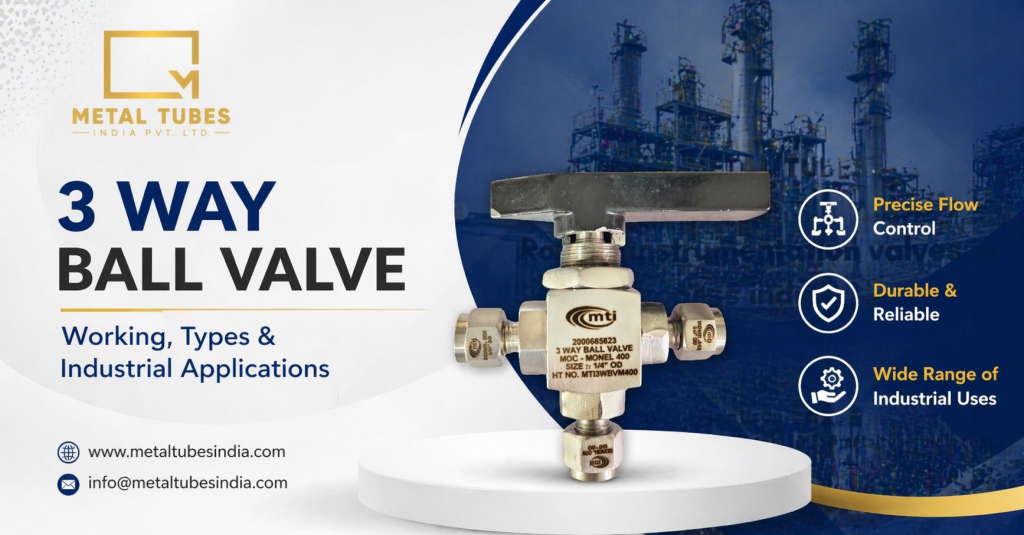
Introduction In industrial piping systems, controlling the direction and flow of fluids is essential for smooth and safe operations. While standard valves handle simple on/off control, many applications require more flexibility. This is where a 3 way ball valve becomes highly effective. Designed to manage multiple flow paths within a single unit, 3 way ball valves help reduce system complexity, improve efficiency, and minimize installation costs. They are widely used across industries such as oil & gas, chemical processing, power generation, and water treatment. In this guide, we explain what a 3 way ball valve is, how it works, its types, and its key industrial uses, so you can make an informed decision for your application. What is a 3 Way Ball Valve? A 3 way ball valve is a quarter-turn valve equipped with three ports, allowing fluid to flow in multiple directions. Unlike a standard 2-way valve, which only permits straight flow, this valve can divert, mix, or shut off flow depending on its design. The internal mechanism consists of a rotating ball with a specially designed bore. By turning the handle or actuator, the flow path changes, enabling different configurations within the same valve body. Working Principle of a 3 Way Ball Valve The working of a 3 way ball valve is based on a simple yet efficient mechanism. Inside the valve, a drilled ball rotates when the handle is turned 90 degrees. This rotation aligns the internal passage with different ports, controlling how the fluid flows. Depending on the valve design, it can: Redirect flow from one inlet to another outlet Combine flow from two sources into one line Stop flow completely when required Because of this functionality, a single 3 way ball valve can replace multiple conventional valves, making the system more compact and easier to maintain. Types of 3 Way Ball Valves 1. L-Port 3 Way Ball Valve The L-port valve has an “L”-shaped internal bore. It is mainly used for diverting flow between two outlets. Key Characteristics: Directs flow in one direction at a time Prevents mixing of fluids Suitable for switching applications 2. T-Port 3 Way Ball Valve The T-port valve features a “T”-shaped bore, allowing flow mixing or splitting. Key Characteristics: Can connect all three ports simultaneously Ideal for blending or distributing fluids Offers multiple flow configurations 3. Manual vs Actuated Valves 3 way ball valves are also classified based on operation: Manual Valves: Operated using a lever handle Actuated Valves: Controlled via pneumatic or electric actuators Actuated valves are preferred in automated systems where precision and remote control are required. Uses of 3 Way Ball Valves in Industry Oil & Gas Industry These valves are widely used for flow diversion, blending, and pipeline management in upstream and downstream operations. Chemical Processing 3 way ball valves are ideal for handling corrosive and hazardous fluids, ensuring safe and controlled mixing. Power Plants In power generation facilities, they are used in cooling systems, steam lines, and fluid distribution networks. Pharmaceutical Industry They support hygienic and precise fluid handling, which is essential for maintaining product quality. Water Treatment Plants Used for redirecting water flow and optimizing system efficiency, especially in filtration and distribution systems. Advantages of Using a 3 Way Ball Valve Combines multiple functions in one valve Reduces piping complexity and installation cost Compact and space-saving design Quick and easy operation High durability with minimal maintenance How to Choose the Right 3 Way Ball Valve Selecting the correct valve ensures long-term performance and safety. Key factors to consider include: Material: Stainless Steel (SS 304/316), Monel, Brass Pressure and Temperature Ratings Flow Requirement (L-Port or T-Port) End Connections: Threaded, flanged, or welded Automation Needs: Manual or actuated A proper selection not only improves efficiency but also reduces downtime and maintenance costs. Why Choose M Metal Tubes India Pvt Ltd? M Metal Tubes India Pvt Ltd is a trusted supplier of high-quality 3 way ball valves and instrumentation components for industrial applications. Our Strengths: Premium materials including SS 304, SS 316, and Monel 400 Strict quality inspection and testing Wide product range with customization options Competitive pricing and reliable delivery Strong presence across major industrial sectors in India We focus on delivering solutions that meet both performance and durability requirements. Conclusion A 3 way ball valve is a versatile and efficient solution for industries that require flexible flow control. With its ability to divert, mix, and regulate fluids, it simplifies piping systems while enhancing operational efficiency. Understanding its working, types, and applications will help you select the right valve for your specific needs. Looking for reliable and high-performance 3 way ball valves for your industrial projects? 👉 Contact M Metal Tubes India Pvt Ltd today for expert support and customized solutions.📩 Request a quote now and get the right valve for your application.
Role of Instrumentation Valves in Process Industries
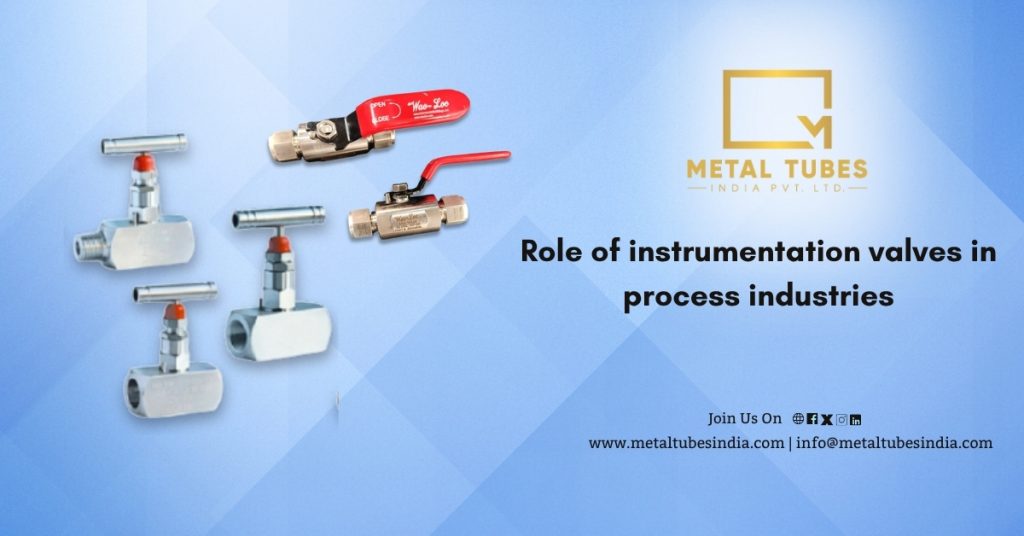
Introduction Instrumentation valves in process industries play a crucial role in ensuring safety, precision, and efficiency. These valves help control the flow, pressure, and direction of fluids in critical operations. Industries such as oil & gas, power plants, and chemical processing depend heavily on instrumentation valves. Without them, accurate measurement and safe operations would not be possible. In this blog, we explain the role of instrumentation valves in process industries, including their types, applications, and benefits. What Are Instrumentation Valves? Instrumentation valves are specialized valves used to control and isolate fluid flow in industrial systems. They are commonly installed with pressure gauges, transmitters, and analyzers. These valves are designed for: High-pressure conditions Leak-proof performance Precise flow control Because of their accuracy, instrumentation valves in process industries are essential for maintaining system stability. Why Are Instrumentation Valves Important? 1. Safety in Industrial Operations Instrumentation valves help isolate systems during maintenance or emergencies. This reduces the risk of leaks and accidents. 2. Accurate Measurement They ensure proper pressure and flow control. As a result, instruments provide correct readings. 3. Leak Prevention High-quality valves minimize leakage. This is especially important in hazardous industries. 4. Improved Efficiency Stable flow conditions improve overall plant performance and productivity. Types of Instrumentation Valves Ball Valves Ball valves provide quick shut-off and tight sealing. They are widely used in industrial systems. Needle Valves Needle valves allow precise flow control. They are ideal for instrumentation applications. Manifold Valves Manifold valves combine multiple valves into one unit. They are commonly used with pressure transmitters. Check Valves Check valves prevent reverse flow. This protects equipment from damage. Relief Valves Relief valves release excess pressure. They ensure system safety. Applications of Instrumentation Valves in Process Industries Instrumentation valves in process industries are used across multiple sectors: Oil and Gas Industry They control flow in pipelines and maintain pressure systems. Power Plants They regulate steam and water flow in boilers and turbines. Chemical Industry They handle corrosive fluids and ensure process accuracy. Pharmaceutical Industry They maintain contamination-free flow and high precision. Marine and Offshore They are used in high-pressure and corrosion-resistant environments. Key Features to Consider When selecting instrumentation valves, consider these features: Corrosion resistance High-pressure tolerance Leak-proof design Long service life Compliance with ASTM, ASME, and ISO standards Benefits of Instrumentation Valves Using high-quality instrumentation valves in process industries offers several benefits: Increased safety Reduced maintenance costs Better system accuracy Long-term durability Efficient operations Why Choose M Metal Tubes India Pvt Ltd? M Metal Tubes India Pvt Ltd is a trusted manufacturer and exporter of instrumentation valves, fittings, pipes, and tubes. We offer: High-quality products Strict quality control Global standard compliance Timely delivery Our solutions are widely used in various process industries for reliable performance. Conclusion Instrumentation valves in process industries are essential for maintaining safety, accuracy, and efficiency. They play a key role in controlling fluid systems across multiple sectors. Choosing the right valves improves performance and reduces risks. Therefore, investing in high-quality instrumentation valves is crucial for long-term success.
Leak-Proof Instrumentation Fittings: How to Prevent Industrial Leakage
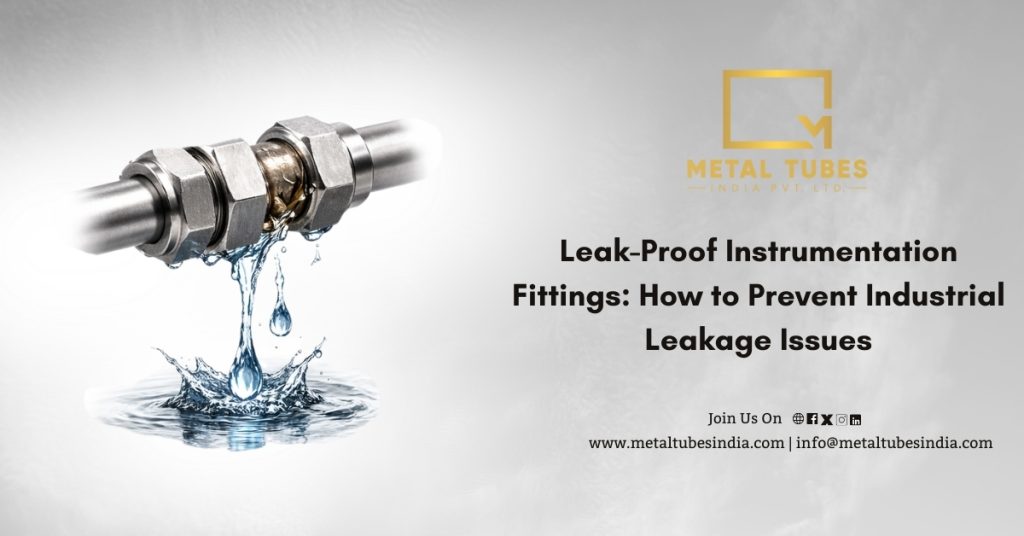
Leak-Proof Instrumentation Fittings: A Complete Guide by M Metal Tubes India Pvt Ltd Introduction Leak-Proof Instrumentation Fittings play a crucial role in preventing industrial leakage in manufacturing plants, oil & gas systems, chemical industries, and hydraulic applications. Even a small leak in fittings or valves can cause safety hazards, production downtime, and costly maintenance. At M Metal Tubes India Pvt Ltd, we understand that leak-proof performance is not just about components it is about reliability, safety, and long-term industrial efficiency. This guide explains the major causes of industrial leakage and how high-quality Leak-Proof Instrumentation Fittings help prevent leakage issues effectively. What Are Leak-Proof Instrumentation Fittings in Industrial Applications? Leak-Proof Instrumentation Fittings are precision-engineered components designed to ensure zero leakage under high pressure, temperature, and vibration conditions. These fittings create a strong and secure seal between tubes, pipes, and industrial equipment. They are widely used in: Oil & Gas Industries Chemical Plants Power Plants Marine Applications Pharmaceutical Industries Hydraulic & Pneumatic Systems Using premium Leak-Proof Instrumentation Fittings from trusted manufacturers like M Metal Tubes India Pvt Ltd improves operational safety and system performance. Major Causes of Industrial Leakage Issues in Fittings and Valves 1. Poor Quality Instrumentation Fittings Low-grade fittings often fail under pressure, leading to leakage and system damage. High-quality Leak-Proof Instrumentation Fittings are essential for long-term reliability. 2. Improper Installation of Fittings Incorrect tightening, misalignment, or wrong fitting selection can cause micro-leakage over time in industrial systems. 3. High Pressure and Temperature Conditions Industrial environments operate under extreme pressure and temperature. Without Leak-Proof Instrumentation Fittings, leakage risks increase significantly. 4. Corrosion and Material Failure Using low-quality materials in corrosive environments leads to cracks, seal damage, and fluid leakage. 5. Vibration in Industrial Machinery Continuous vibration can loosen joints and fittings, making leak-proof sealing difficult without precision-engineered instrumentation fittings. How Leak-Proof Instrumentation Fittings Prevent Industrial Leakage ✔️ Choose High-Quality Leak-Proof Instrumentation Fittings Selecting precision-engineered Leak-Proof Instrumentation Fittings is the most effective way to prevent industrial leakage. At M Metal Tubes India Pvt Ltd, our fittings are designed for: High pressure resistance Corrosion resistance Long durability Superior leak-proof sealing ✔️ Use the Right Material for Leak-Proof Performance Material selection directly impacts leakage prevention. Best materials used in Leak-Proof Instrumentation Fittings: Stainless Steel (SS 304 / SS 316) – High corrosion resistance Brass – Durable and cost-effective Alloy Steel – Suitable for high-pressure applications Proper material ensures leak-free performance in harsh industrial environments. ✔️ Proper Installation of Instrumentation Fittings Even the best Leak-Proof Instrumentation Fittings can leak if installed incorrectly. Installation tips: Use correct torque tightening Avoid over-tightening Ensure proper tube alignment Use skilled technicians This significantly reduces leakage risks in industrial pipelines and systems. ✔️ Regular Inspection and Maintenance of Industrial Fittings Preventive maintenance is essential to maintain leak-proof systems. Recommended practices: Regular inspection of fittings and valves Replacement of worn components Corrosion and crack inspection Periodic pressure testing Routine monitoring helps detect minor leakage before major industrial failure. Role of Precision Manufacturing in Leak-Proof Instrumentation Fittings Precision engineering is the foundation of Leak-Proof Instrumentation Fittings.As a leading manufacturer based in Mumbai, M Metal Tubes India Pvt Ltd uses advanced manufacturing processes, tight tolerances, and strict quality testing to ensure zero-leak performance, Precision manufacturing follows ASME industrial engineering standards to ensure leak-proof sealing and durability. Our manufacturing strengths include: High-precision machining Strict quality control Premium raw materials Industry-standard production Benefits of Using Leak-Proof Instrumentation Fittings in Industries 🔒 Enhanced Industrial Safety Prevents hazardous gas, oil, and chemical leakage. 💰 Reduced Maintenance Costs Leak-proof systems reduce downtime and repair expenses. ⚙️ Improved System Efficiency Leak-free fittings improve flow efficiency and operational stability. 📈 Extended Equipment Life Prevents corrosion damage and increases equipment lifespan. 🏭 Reliable Industrial Operations Ensures uninterrupted industrial production and performance. Why Choose M Metal Tubes India Pvt Ltd for Leak-Proof Instrumentation Fittings? M Metal Tubes India Pvt Ltd is a trusted manufacturer and supplier of high-quality Leak-Proof Instrumentation Fittings, valves, and industrial components designed for critical applications. Our product range includes: Instrumentation Fittings Needle Valves Manifold Valves Tube Fittings Air Headers Condensate Pots Industrial Valves & Components All products are manufactured as per international quality standards to deliver reliable and leak-proof industrial performance. Conclusion Industrial leakage can cause serious safety, financial, and operational risks. Using high-quality Leak-Proof Instrumentation Fittings, proper installation methods, and regular maintenance can effectively eliminate leakage issues. M Metal Tubes India Pvt Ltd provides precision-engineered Leak-Proof Instrumentation Fittings that ensure safety, durability, and long-term industrial efficiency. Investing in premium leak-proof fittings is the key to achieving zero leakage and reliable industrial systems.
What Are Double Ferrule Fittings? Working, Advantages & Applications
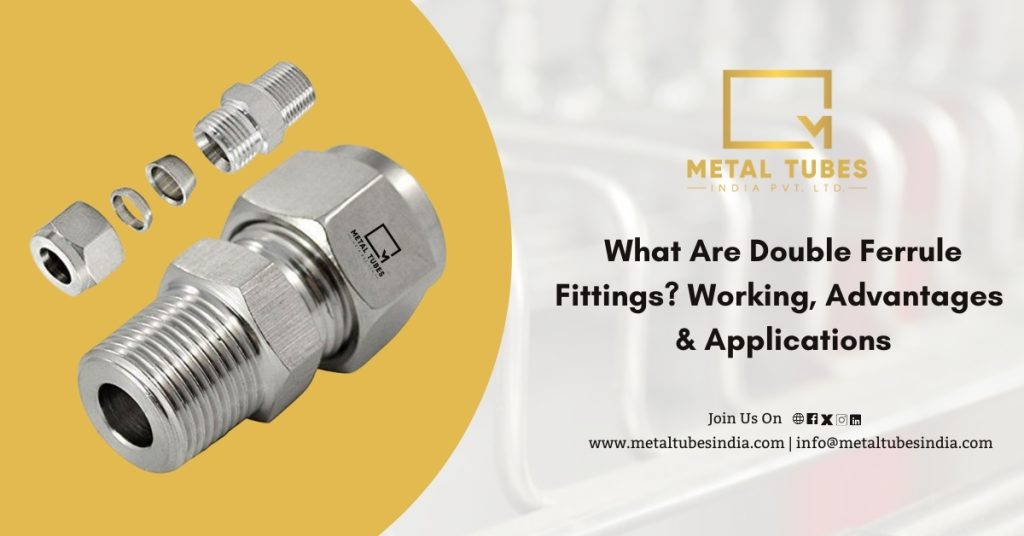
Introduction In industrial and instrumentation systems, safe and leak-free tube connections are very important. Even a small leakage can lead to safety issues, downtime, and money loss. Because of this, industries prefer reliable compression fittings that offer long-term performance. One such solution is double ferrule fittings, which are widely used in important applications. In this blog, we explain what they are, how they work, their advantages, and where industries commonly use them. What Are Double Ferrule Fittings? Double ferrule fittings are a type of compression fitting designed to connect tubing securely in instrumentation systems. These fittings use two ferrules (front and back) that work together to provide strong tube grip and reliable sealing. Manufacturers usually make these fittings using stainless steel, brass, or alloy steel. As a result, they perform well in high-pressure and vibration-prone environments. Learn more about our full range of instrumentation fittings Main Components of the Fitting A standard double ferrule fitting includes: Nut – Applies tightening force Back ferrule – Holds the tube firmly Front ferrule – Creates a leak-tight seal Body – Supports tube alignment Because each component has a specific role, the fitting delivers better safety and durability than single ferrule designs. How Does the Fitting Work? First, the tube is inserted fully into the fitting body.Next, when the nut is tightened, the back ferrule grips the tube securely.At the same time, the front ferrule seals against the body. As a result, the joint becomes leak-free and resistant to vibration. Therefore, these fittings are ideal for long-term industrial use without frequent maintenance. Advantages of Using Double Ferrule Fittings Leak-Free Performance The two-ferrule design provides reliable sealing even under high pressure. Strong Tube Holding The back ferrule prevents tube pull-out, improving system safety. Easy Installation No welding or special tools are required, which saves time during installation. Vibration Resistance These fittings perform well in systems with constant vibration or temperature changes. Long Service Life Reduced tube damage leads to lower maintenance costs over time. Explore stainless steel instrumentation fittings Industrial Applications Double ferrule fittings are commonly used in: Oil & Gas plants – For high-pressure fluid and gas lines Chemical & Petrochemical industries – For corrosive media handling Power plants – For steam and hydraulic systems Instrumentation & automation systems – For accurate measurement lines Pharmaceutical and food industries – For clean and hygienic connections Comparison: Double Ferrule vs Single Ferrule Feature Double Ferrule Single Ferrule Sealing reliability High Moderate Vibration handling Excellent Limited Tube grip Strong Average Suitable for high pressure Yes Not recommended Because of these differences, engineers prefer double ferrule fittings for critical systems. Why Choose M Metal Tubes India Pvt Ltd? At M Metal Tubes India Pvt Ltd, we supply precision-engineered instrumentation fittings that meet industry standards. Our products are trusted for their consistent quality and dependable performance. ✔ High-grade raw materials✔ Accurate manufacturing✔ Strict quality inspection✔ Suitable for critical industrial applications Contact M Metal Tubes India Pvt Ltd Conclusion To sum up, double ferrule fittings provide secure, leak-free, and long-lasting tube connections for industrial systems. Their strong grip, easy installation, and vibration resistance make them a reliable choice for demanding environments. If you need dependable instrumentation solutions, M Metal Tubes India Pvt Ltd is ready to support your requirements.