
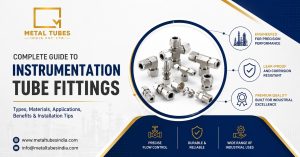
Instrumentation tube fittings play a critical role in industrial piping and fluid control systems. These fittings help create secure, leak-proof connections in industries where precision, safety, and reliability are essential.
From oil and gas plants to chemical processing units, instrumentation fittings are widely used to maintain smooth flow control and pressure handling. Choosing the right fittings can improve system efficiency, reduce leakage risks, and increase operational safety.
In this complete guide, we will explain everything you need to know about instrumentation tube fittings, including their types, materials, applications, advantages, installation methods, and selection criteria.
What Are Instrumentation Tube Fittings?
Instrumentation tube fittings are mechanical components used to connect tubes, pipes, and equipment in industrial instrumentation systems. These fittings ensure a tight and secure connection while handling gases, liquids, hydraulic fluids, or chemical media under pressure.
They are specially designed for high-pressure and high-temperature applications where leak-free performance is necessary.
Instrumentation tube fittings are commonly used in:
- Oil & Gas Industry
- Chemical Processing Plants
- Power Generation Units
- Pharmaceutical Industry
- Petrochemical Plants
- Food Processing Industry
- Semiconductor Manufacturing
- Hydraulic and Pneumatic Systems
Why Instrumentation Tube Fittings Are Important
Industrial systems operate under extreme pressure and temperature conditions. Even a minor leakage can lead to production loss, safety hazards, or equipment failure.
High-quality instrumentation tube fittings help industries:
- Prevent fluid leakage
- Improve operational safety
- Maintain pressure integrity
- Reduce maintenance costs
- Ensure long-term reliability
- Improve system efficiency
These fittings are essential for industries that require precision flow control and accurate instrumentation performance.
Types of Instrumentation Tube Fittings
There are several types of instrumentation tube fittings available for different industrial applications.
1. Compression Tube Fittings
Compression fittings are one of the most commonly used instrumentation fittings. They use ferrules to create a strong mechanical seal around the tube.
Key Features:
- Leak-proof sealing
- Easy installation
- Excellent vibration resistance
- Suitable for high-pressure systems
Common Applications:
- Hydraulic systems
- Gas distribution lines
- Chemical plants
2. Elbow Fittings
Elbow fittings are used to change the flow direction of the tubing system.
Types:
- 45-degree elbow
- 90-degree elbow
These fittings help save installation space and improve pipeline routing.
3. Tee Fittings
Tee fittings are used to divide or combine fluid flow in multiple directions.
Benefits:
- Efficient branch connections
- Compact system design
- Better flow distribution
4. Union Fittings
Union fittings connect two tubes together and allow easy disassembly during maintenance.
Advantages:
- Quick maintenance access
- Reusable connection
- Strong sealing performance
5. Reducer Fittings
Reducer fittings connect tubes of different sizes while maintaining smooth fluid flow.
They are widely used in systems where pressure or flow adjustments are required.
Single Ferrule vs Double Ferrule Fittings
Understanding the difference between single ferrule and double ferrule fittings is important when selecting instrumentation fittings.
| Feature | Single Ferrule | Double Ferrule |
|---|---|---|
| Sealing Mechanism | One ferrule | Front and back ferrule |
| Vibration Resistance | Moderate | Excellent |
| Leak Protection | Good | Superior |
| Installation | Simple | More secure |
| Industrial Usage | General applications | Critical high-pressure systems |
Double ferrule fittings are widely preferred in demanding industrial environments because they provide stronger grip and better leak protection.
Materials Used in Instrumentation Tube Fittings
Material selection is critical for ensuring corrosion resistance and long service life.
Stainless Steel Instrumentation Fittings
Stainless steel fittings are highly popular because of their strength and corrosion resistance.
Common Grades:
- SS 304
- SS 316
- SS 316L
Benefits:
- Excellent corrosion resistance
- High temperature tolerance
- Long durability
- Low maintenance
Brass Instrumentation Fittings
Brass fittings are commonly used in low-pressure and non-corrosive applications.
Advantages:
- Cost-effective
- Good machinability
- Suitable for water and air systems
Alloy Steel Fittings
Alloy steel fittings are used in high-pressure industrial environments.
Features:
- Superior mechanical strength
- Excellent pressure handling
- Better wear resistance
Applications of Instrumentation Tube Fittings
Instrumentation tube fittings are widely used across various industries.
Oil and Gas Industry
These fittings are used in offshore platforms, refineries, and gas distribution systems where leak-proof performance is essential.
Chemical Processing Plants
Chemical industries require corrosion-resistant fittings for handling aggressive fluids and chemicals.
Power Generation Plants
Instrumentation fittings help maintain steam, hydraulic, and cooling systems in thermal and nuclear power plants.
Pharmaceutical Industry
High-purity fittings are used to maintain contamination-free fluid transfer systems.
Food and Beverage Industry
Sanitary instrumentation fittings support hygienic processing systems and clean fluid transportation.
Benefits of High-Quality Instrumentation Tube Fittings
Using premium-quality instrumentation fittings offers several advantages.
Leak-Free Performance
Properly designed fittings minimize leakage risks in high-pressure systems.
High Corrosion Resistance
Stainless steel fittings perform well in harsh industrial environments.
Long Service Life
Durable fittings reduce replacement frequency and maintenance expenses.
Easy Installation
Modern instrumentation fittings support quick and reliable installation.
Better Safety
Leak-proof connections improve workplace safety and reduce accident risks.
How to Choose the Right Instrumentation Tube Fittings
Selecting the correct fitting depends on multiple industrial factors.
Consider Operating Pressure
Choose fittings that can safely handle the system pressure.
Evaluate Temperature Conditions
High-temperature applications require heat-resistant materials.
Check Chemical Compatibility
Ensure the fitting material is compatible with the process media.
Verify Tube Size and Thickness
Improper sizing can lead to leakage and performance issues.
Follow Industrial Standards
Always select fittings manufactured according to international standards.
Important Standards for Instrumentation Tube Fittings
Industrial fittings should comply with recognized standards for quality and safety.
Common Standards:
- ASTM Standards
- ASME Standards
- DIN Standards
- ISO Standards
Certified fittings ensure reliable industrial performance and operational safety.
Installation Tips for Instrumentation Tube Fittings
Proper installation improves fitting performance and prevents leakage.
Best Practices:
- Use clean and burr-free tubing
- Avoid over-tightening
- Follow manufacturer torque recommendations
- Inspect ferrules before installation
- Perform pressure testing after assembly
Correct installation significantly increases the lifespan of instrumentation systems.
Common Problems in Instrumentation Fittings
Leakage Issues
Leakage usually occurs due to improper installation or damaged ferrules.
Corrosion Damage
Using incorrect material grades can result in corrosion failure.
Vibration Loosening
Industrial vibration may loosen fittings if not properly secured.
Incorrect Tube Sizing
Improper tube dimensions can reduce sealing effectiveness.
Regular inspection and preventive maintenance help avoid these issues.
Future Trends in Instrumentation Tube Fittings
The industrial sector is rapidly evolving with advanced manufacturing technologies.
Emerging Trends:
- Smart leak detection systems
- High-purity instrumentation fittings
- Advanced corrosion-resistant alloys
- Automation-compatible fitting systems
- Sustainable manufacturing practices
Modern industries are increasingly demanding reliable and maintenance-free fluid connection solutions.
Conclusion
Instrumentation tube fittings are essential components in industrial fluid and gas control systems. Their ability to provide secure, leak-proof, and durable connections makes them critical for safe industrial operations.
From stainless steel compression fittings to advanced double ferrule systems, choosing the right instrumentation fitting improves efficiency, safety, and long-term performance.
Industries should always invest in high-quality instrumentation tube fittings that meet international standards and application requirements. Proper material selection, installation, and maintenance can significantly increase the reliability of industrial systems.
Frequently Asked Questions (FAQs)
What are instrumentation tube fittings used for?
Instrumentation tube fittings are used to connect tubes and pipes in industrial fluid and gas systems while ensuring leak-proof performance.
Which material is best for instrumentation fittings?
Stainless steel, especially SS 316 and SS 316L, is widely preferred because of its excellent corrosion resistance and durability.
What is the difference between single ferrule and double ferrule fittings?
Single ferrule fittings use one sealing ring, while double ferrule fittings use two ferrules for improved grip and leak protection.
Are instrumentation tube fittings reusable?
Yes, many high-quality instrumentation fittings are reusable if properly installed and maintained.
Why are leak-proof fittings important in industries?
Leak-proof fittings improve operational safety, reduce fluid loss, and prevent equipment damage in industrial systems.